The product is already round
A bottle, a jar or a tube inside a square box leaves four corners of dead volume. A cylinder follows the product, so the box is smaller and the cavity does not need to locate a circle inside a square.
A custom cylinder box, made as a paper tube or a wrapped greyboard cylinder, with a lid that seats on the wall rather than over four corners. It is the structure this factory is built around and the one we would be judged on: a 50 ml flacon is heavy glass, the cap protrudes, and the lid has to open as a ritual without binding on a circle.
| Quantity | Unit price |
|---|---|
| 500 pcs | $1.00 – $3.50 |
| 1,000 pcs | $0.70 – $2.50 |
| 5,000 pcs | $0.40 – $1.50 |
Prices are indicative reference unit prices per box in USD, based on the stated order quantities. Actual pricing depends on box dimensions, materials, printing, finishing, inserts, order specifications and shipping terms. Final prices are confirmed through a written quotation.
Reference prices reviewed
Metapackink is a custom cylinder box manufacturer based in Guangzhou, China. The company offers paper tube and rigid greyboard cylinder packaging, with customization options for dimensions, materials, printing and finishing. Minimum order quantities are generally based on diameter and product specifications. Standard custom orders typically start at 500 pieces per diameter and specification. Available stock diameters, simpler structures and repeat orders may allow lower quantities; special materials, complex structures and custom inserts may require higher minimums. Your written quotation confirms the minimum for your specification.
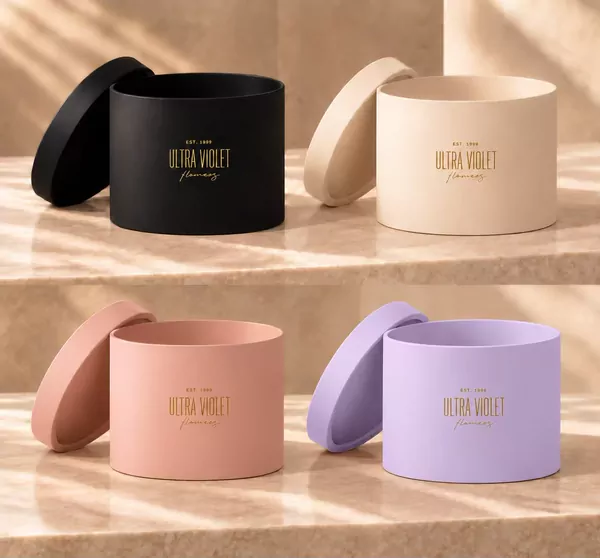
A cylinder box is not a square box with the corners taken off. Two different constructions produce the same silhouette: a spiral- or convolute-wound paper tube, whose wall is thin and whose seam is continuous, and a rolled greyboard cylinder wrapped by hand, which is thicker, heavier and finished like a rigid box. The first is the economical tube used for tea, cosmetics and supplements; the second is the premium box a fragrance house puts a flacon in.
That difference decides almost everything downstream — the diameter tolerance, how the lid registers, whether the base needs reinforcing and what the box weighs in freight. It is also why this page leads with fragrance: a 50 ml flacon is the hardest case, because the product is heavy glass, the cap protrudes, and the box has to open as a ritual without the lid binding on a circle.
The same object is quoted under three names depending on who is asking: round tube packaging, a cylinder box, a hat box, a drum box. The word changes with the buyer and the market; the construction, the lid and the fitment do not, so they are specified here once rather than on four pages that would each say the same thing.
Round tube work is what this factory is organised around, and the home page states the standard it is held to: being the best is a target, not a certificate. We are the manufacturer rather than a broker, so the tube is wound, the wrap printed and the lid made in our own plant. An ambition cannot be checked by a buyer, so what is on this page instead is the specification — the diameter range, the wall, the lid styles — and a sample approved with your product seated in it.
Every figure on this page is either a working range for the construction or a dimension we confirm from your container. Where a capacity, an internal diameter or a tolerance has not been supplied, it is marked as to be confirmed rather than filled with an estimate; the sample is approved with your product seated in the box.
Minimum order quantities are generally based on diameter and product specifications. Standard custom orders typically start at 500 pieces per diameter and specification. Available stock diameters, simpler structures and repeat orders may allow lower quantities; special materials, complex structures and custom inserts may require higher minimums. Your written quotation confirms the minimum for your specification.
A printed and wrapped box has one setup. A box that is printed, laminated, foiled, embossed and die-cut has five, and each one is paid once whether the run is 500 or 5,000. Bought components — magnets, ribbon, a moulded tray — arrive with a minimum lot of their own, and hand work never amortises: twice the boxes is twice the wrapping.
A cylinder adds a constraint a rectangular box does not have: the tool is a diameter. A wound tube is made on a mandrel cut to that size, a factory owns a finite set of them, and between two mandrels there is no size at all — so every diameter is its own minimum, and four diameters are four runs.
| Product type | Paper Tube / Rigid Cylinder Box |
|---|---|
| Diameter range | 40 – 200 mm |
| Height | 30 – 300 mm |
| Wall / board | Greyboard 1.5 – 3 mm; tube wall 1.5 – 2.5 mm |
| MOQ | From 500 pieces |
| Lid style | Shoulder Lid / Flush Lid |
| Customization | Size / Printing / Material / Finishing |
| Tolerance | Die-cut panels to ISO 2768-1 class m: ±0.2 mm up to 30 mm, ±0.3 mm up to 120 mm. An assembled box carries a wider allowance, because the wrap is applied by hand. |
| Assembled size | Finished outer dimensions ±0.8 mm, measured across the lid once the wrap has settled |
| Working range | Diameter 40 – 200 mm wrapped (50 – 150 mm wound paper tube) × height 30 – 300 mm. |
| Print sheet | Sheet-fed offset up to 1,100 × 1,600 mm; flexo up to 1,397 × 2,413 mm |
Ranges are working limits for the construction; the internal diameter is set from your product and confirmed on a loaded sample.
Board thickness is specified to ISO 534, the standard method for the thickness, density and specific volume of paper and board, so a millimetre in a specification means the same thing to both sides.
A bottle, a jar or a tube inside a square box leaves four corners of dead volume. A cylinder follows the product, so the box is smaller and the cavity does not need to locate a circle inside a square.
A lid that lifts off a round wall is a different gesture from a hinged or magnetic flap, and for fragrance it is the one customers expect.
A cylinder is the cheapest way to stand apart on a shelf without changing the product or the print budget.
A die-cut disc collar holds a flacon by its shoulder and lets the foot carry the load, which is stronger and lighter than a foam block.
A cylinder box for fragrance is specified around a 30 – 200 ml flacon held by a disc collar, with the cap sitting in a recess in the lid. The structure this page is specified around first.
A 100 – 500 ml jar or powder tub, with a disc and a ring so the container cannot rotate and the label stays square to the seam.
Serum bottles, airless pumps and tubes in a flush-lidded cylinder that stands on a shelf and reads as a single object.
Chocolate columns, dragées and tea caddies, with a food-grade liner and a divider star so the pieces do not travel as a block.
A 100 – 250 g loose tea or a 250 g coffee bag sits in a 70 – 85 mm paper tube with a metal-lid canister, foil-lined for aroma; the seam hides under the label band and the lid is the reseal, not just the closure.
A standard 70 – 80 mm jar rides in a paper tube with a die-cut disc that stops it tipping in transit; the tube is shorter than the jar is tall, so the flame-side label stays visible on shelf.
A 50 ml tasting mini or a 200 ml flask is held by a disc collar whose aperture clears the cap; a heavy glass bottle needs a reinforced base so the wall does not bow under the weight.
A 40 – 55 mm column of chocolates gets a divider star so the pieces do not settle into one block, plus a food-grade liner and migration-tested ink for the destination market.
A single pendant, a pair of cufflinks or one watch in a short tube with a flocked disc or EVA ring cut to the piece; the diameter follows the item, so it is confirmed on the sample rather than taken from a size list.
| Your product | Best construction | Lid | Fitment | Confirm on the sample |
|---|---|---|---|---|
| Perfume or fragrance flacon, 30 – 200 ml | Wrapped greyboard cylinder — the premium tube a fragrance house puts a flacon in | Shoulder-neck or telescoping | Die-cut disc collar at the shoulder, recess in the lid for the cap | Widest point of the glass; overall height with the cap on |
| Skincare, serum, airless pump or tube | Wrapped cylinder, or a wound paper tube for lighter volumes | Flush or shoulder-neck | Single disc, or a printed card where the item is slim | Diameter from the bottle; extra height for pump travel |
| Food — chocolate, tea, coffee, confectionery | Wound paper tube with a food-grade liner | Metal-lid canister or flush lid | Divider star or disc, and an anti-rotation ring | Liner fitted; migration-tested ink for the market |
| Candle in a glass jar | Wound paper tube | Flush lid | Die-cut disc so the jar cannot tip in transit | Jar diameter; keep the flame-side label visible |
| Spirits miniature or full bottle | Paper tube or wrapped cylinder | Flush or telescoping | Disc collar plus a reinforced base | Bottle weight; base reinforcement under heavy glass |
The construction follows the product, not the category it is filed under. Every diameter is its own run, so the internal diameter is set from your container and confirmed on a loaded sample rather than taken from a stock size list.
A cylinder has one controlling dimension. Get the diameter wrong and the lid binds; get the wall wrong and the base bows under a bottle. Both are set on the sample, not on the artwork.
There are no corners to absorb error. On a 90 mm diameter a 0.5 mm error shows as a lid that binds on one side, so the tube is cut from one disc and the wrap thickness is counted inside the diameter rather than added after it.
Customise this boxA shoulder-neck lid stops on an inner neck; a flush lid sits level with the wall; a telescoping lid covers most of the body. Each changes the visible band and how the lid finds its position, and a flacon’s cap has to clear the inside of whichever is chosen.
Customise this boxA round box is located by a die-cut disc: an aperture larger than the cap and smaller than the shoulder catches the bottle without foam. A jar needs a ring as well as a disc so it cannot rotate; a chocolate column needs a star.
Customise this boxA paper tube is wound, not wrapped. A strip of paper is fed onto a heated mandrel cut to the diameter the product needs — spirally for the common tube, convolutely where the seam has to run parallel to the wall — and the seam closes continuously around the circumference. No corner is cut, so no corner can gap.
That is where the cost difference comes from. Paper tube tooling is a mandrel per diameter rather than a cutting die per box size, so a new diameter on a short run means a new mandrel, not a new die set. The trade is a thinner wall — 1.5 – 2.5 mm against 1.5 – 3 mm for greyboard — and a narrower working band: 50 – 150 mm for a wound tube against 40 – 200 mm for a wrapped cylinder.
It is the right construction where the tube is a container as much as a box: a tea or coffee caddy with a metal lid that reseals, a supplement jar, a candle jar, a column of chocolates. Where the product is heavy glass the tube is still possible, but the base has to be reinforced, and at that point the wrapped cylinder is usually the cheaper answer.
A rigid cylinder starts as greyboard, 1.5 – 3 mm, rolled to the diameter and held by the wrap rather than by a seam. The wrap goes on by hand or on a wrapping machine and the join is buried under it. Structurally it is the same object as a square rigid box: a board wall, a wrapped face, a lid that seats on the wall.
Because the wall is board, everything a square rigid box can carry can be carried here — foil on a curved face, an emboss kept small enough not to distort around the circumference, soft-touch lamination that also hides the wrap join, a printed interior, a textured or fabric wrap that has to survive being rolled without cracking.
The price of that is weight and hand work, which is why this construction belongs to fragrance, spirits and gift rather than to a tea caddy. A 50 ml flacon in a wrapped cylinder is the case this page is specified around: a disc collar carries the bottle at the shoulder, the cap sits in a recess in the lid, and the lid lifts off a circle without binding.
A cylinder follows a round product and fights a square one. A compact, a book or a bar of soap needs a tube whose diameter matches the diagonal of the item — 1.41 times the side — so the box reads oversized for what is inside it, and buyers register that before they can name it. The same item sits in a square rigid box in a cavity cut to its shape, with no dead air and no oversized silhouette.
It is also the wrong structure wherever the reveal has to be a hinge. There is no straight edge on a circle to hang a cover from, so a magnetic flap, a drawer or a book-style spread cannot be added to a tube without a join that shows. Those are rigid box questions, and answering them before the quotation costs less than answering them at sampling.
The third case is proportion. A tube is wound to a diameter and cut to a height, and it carries load around the circumference rather than in corners; where the product is long and thin, the open end has little to resist it and the rim deforms before the lid is seated. A narrow square box with a fitted insert carries that shape better, or a tube with a heavier wall and a reinforced rim.
The dominant finish on fragrance; a crest or a wordmark on a curved face needs its own die and its own registration check.
A velvet surface that reads as expensive in the hand and hides the seam line on a wrapped cylinder.
Tactile branding on a curved wall, kept small because a large relief distorts around the circumference.
Gloss detail over a matte field, most useful on a dark wrap where a foil would be too loud.
A textured wrap has to survive being rolled around a cylinder without cracking at the seam.
A single-colour print on the inside face, which is the first thing a customer sees when the lid comes off.
The constraints that come up repeatedly when a paper tube is specified for a real product. These are engineering reasoning and commonly cited process limits, not measured results from a customer order — the figures that belong to a particular job are the ones confirmed on its own sample and written quotation.
An all-paper tube is only as recyclable as its weakest component. The base, the liner, the adhesive and the closure all have to belong to the same fibre stream before the claim can go on the pack. Taking the metal out also changes how the bottom carries the load, so the tube height and the shipper fit are re-checked on a physical sample rather than assumed.
Powders that cake or lose potency need a barrier between the product and the paper wall. A laminated liner is the usual route, but the laminate changes both what the tube can claim at end of life and what the seam has to hold. Specify the barrier by a test method agreed with the liner supplier, not by a figure borrowed from another project.
Uncoated kraft absorbs ink, so a spot colour printed straight onto it dries darker and duller than the same ink on a coated sheet. A white underprint restores a neutral base, and proof approval has to happen on the actual wrap rather than on a coated proof. Dark and metallic shades are more forgiving than pale ones.
A foil block wants a flat, supported area. On a tube the seam is a step under the wrap and the wall curves away from the die, so foil that crosses the join or runs too far round lifts at the edges. Keep the stamped area clear of the seam and approve it on a production-intent sample; on a narrow tube a printed metallic is often the more reliable answer.
Soft-touch lamination is a film, and a film on a wound tube has a join where it can lift. Cold-chain and damp storage are where blistering and seam delamination show up. A water-based matte varnish avoids the film altogether; if the hand-feel is non-negotiable, the liner and the cure schedule have to be agreed with the converter and proven in the conditions the pack will actually travel in.
No value in this section is a measured project result. Test methods, thresholds and material specifications are confirmed against the physical sample and the supplier's own data sheet before they are written into an order.
| Decision | This box suits you if | This box does not suit you if |
|---|---|---|
| Order quantity | You can commit 500 pieces to one diameter, and you know which diameters you need. | You need a dozen diameters in a few dozen pieces each. Every diameter is its own run. |
| Product shape | Round or near-round: a flacon, a jar, a serum bottle, a roll, a column of chocolate. | A flat compact, a wide palette, or a set that has to open like a book. |
| The reveal | The lid lifts off the wall and the product rises out of the tube. | The presentation has to lie flat, as a spread the buyer reads left to right. |
| Structure | Round rigid cylinder — paper tube or wrapped greyboard |
|---|---|
| Diameter | 40 – 200 mm wrapped; 50 – 150 mm paper tube |
| Height | 30 – 300 mm |
| Internal diameter | Set from your container; measured on the sample, not taken from a stock size list |
| Nominal capacity | Set by internal diameter and usable height; to be confirmed on the sample |
| Customisation | Diameter, height, wall, lid, fitment, wrap and finish specified per order |
| Wall / board | Greyboard 1.5 – 3 mm; tube wall 1.5 – 2.5 mm |
| Wrap paper weight | 120 – 350 gsm coated or uncoated; kraft and speciality wraps available |
| Internal vs external diameter | Internal = external diameter minus two wall thicknesses |
| Vertical load and stacking | The round wall carries vertical load; heavy glass gets a reinforced base; stacking confirmed on a loaded sample |
| Lid | Shoulder-neck, flush, telescoping or metal-lid canister |
| Fitment | Die-cut disc collar, EVA ring, moulded pulp star, divider disc |
| Printing | Offset CMYK or Pantone spot; digital for short runs |
| Finishing | Foil, emboss, deboss, spot UV, soft-touch, textured wrap |
| Food contact | Food-grade liner and ink where the box touches food |
| Minimum order | Typically from 500 pieces per diameter and specification; confirmed in your written quotation |
| Sample lead time | 4 – 6 working days from approved artwork |
Specifications are confirmed on your written quotation. Anything not written into the specification is not part of the order.
Board thickness is specified to ISO 534, the standard method for the thickness, density and specific volume of paper and board, so a millimetre in a specification means the same thing to both sides.
Colour is controlled to ISO 12647-2, offset process control, measured against a physical Pantone reference rather than a screen.
| Typical container | Capacity | Internal diameter | Usable height | Fitment |
|---|---|---|---|---|
| Fragrance flacon | To be supplied | To be measured from the bottle | To be measured with the cap on | Die-cut disc collar and a recess in the lid |
| Supplement jar or powder tub | To be supplied | To be measured from the container | To be measured with the closure on | Disc plus an anti-rotation ring |
| Serum bottle, airless pump or tube | To be supplied | To be measured from the container | Allow for the pump travel | Single disc or a printed paper card |
| Chocolate column, dragées or tea caddy | To be supplied | To be measured with the liner fitted | To be measured per layer | Divider star or disc, with a food-grade liner |
| Candle jar or spirits miniature | To be supplied | To be measured from the glass | To be measured with the closure on | Disc collar and a reinforced base |
The capacity and internal diameter are not stock sizes. They are set by the container you send us, checked on a loaded sample, and written into the quotation. The working diameter and height ranges in the specification above describe what can be made, not what is on a shelf.
Wall thickness is the biggest driver of rigidity, weight and cost after the diameter itself. A paper tube is built from paper plies wrapped on a mandrel: one ply of 300 gsm paper is roughly 0.45 mm, so a 1.5 to 2.5 mm tube wall is three to five plies. A greyboard cylinder starts from a 1.5 to 3 mm board core and adds the printed wrap on top, so its wall is thicker and heavier from the first layer.
Choose the wall from the product mass and how the box is handled, not from a catalogue. A 50 ml fragrance flacon is heavy glass and needs a wall of at least 2 mm with a reinforced base; a light, tall tea caddy can run a 1.5 mm tube wall but wants a heavier rim so the open end does not ovalise when the lid is pressed on. The taller and thinner the tube, the more the wall has to resist the lid being offered up.
The check is physical, not on paper. If the filled box can be squeezed between thumb and finger and the wall deforms, add a ply. If the lid binds on the circle, the wall is too thick for the lid seat or the base is not squared. Every wall is confirmed on a loaded sample with the product seated, and written into the quotation.
The two constructions share a silhouette but not a method. A paper tube is spiral- or convolute-wound on a mandrel from kraft or coated paper; the wall is thin and the seam is one continuous line. A rigid greyboard cylinder wraps a stiff 1.5 to 3 mm board core in printed paper and is finished like a rigid box, so the wall is thicker, the roundness holds better, and the lid seats on a shoulder rather than a flat edge.
In practice the tube is the economical, lighter structure: it costs less to freight and suits tea, supplements and everyday cosmetics where weight is part of the cost. The greyboard cylinder is the premium box a fragrance house puts a flacon in; it takes foil and emboss cleanly, reads as more valuable in the hand, and survives a drop better because the base is a built board rather than a wound disc.
We do not present one as simply better. On the quotation the choice follows the product: a 50 ml flacon almost always goes greyboard cylinder, a 200 g tea refill almost always goes paper tube. The full trade-off in footprint, tolerance, stacking and freight is on the round tube vs. rigid box guide linked from this page.
The inner diameter is the external diameter minus two wall thicknesses: internal = external minus 2 times the wall. The wall thickness is known from the construction, so once the outside diameter is set, the inside follows. This is the relationship the specification table states and the one a buyer most often needs to reverse.
Work it from the product outward. Measure the widest point of the item — a flacon body of 58 mm, say — then add clearance for insertion and the fitment: about 1 mm each side for a slip fit, more if a die-cut disc collar sits at the inner wall. So the inner diameter is 58 plus 2 equals 60 mm; with a 2 mm wall the external diameter is 60 plus 4 equals 64 mm.
Two things the sample room checks that the arithmetic misses. The cap usually overhangs the body, so the neck must clear the lid seat on a shoulder-neck style; measure the body but check the cap. And a tall, thin tube wants a heavier wall at the open rim so it does not go oval when the lid is pressed on. Every diameter is confirmed on a loaded sample, never taken from a stock size list.
A cylinder quotation is built from a short list of cost lines, and most of them are visible on this page. Structure leads: a greyboard cylinder carries more board and hand-wrap labour than a wound paper tube. Diameter and height set the material area — a 200 mm tube uses far more wrap than a 50 mm one. Wall thickness, the wrap grade, the number of print colours and the finishing passes (foil, emboss, soft-touch) each add a line, and a fitment such as a disc collar or an EVA ring adds another.
Two lines move with volume and timing. The minimum is 500 pieces, and tooling amortises across the run, so a 2,000-piece order is cheaper per unit than 500; the sample is charged at US$30 to 120 with a 4 to 6 working-day lead, credited against the production order where the quotation says so. The last line is packing and freight: carton count, dimensions, weight and the Incoterm — under FOB you arrange the main carriage, under DDP you receive one landed cost.
The honest comparison is landed cost, not the box price alone. A lower box price with a larger shipping cube can cost more by the time it arrives, so we ask buyers to compare suppliers on the figure that reaches their warehouse, not the ex-works number. Anything not written into the specification is not part of the order.
Three short clips and two stills, shot on a bench in our sample room rather than on the line, plus one photograph of the plant that prints the paper. The boxes carry customers’ own artwork, which is what a finished tube actually looks like. Each caption says what the frame shows and where it stops short, because footage from a bench is evidence of the object and not of the factory.
Six seconds of the same box turned in one hand. Matte is the finish buyers ask to see rather than read about: it either holds the wall without a highlight or it does not, and no swatch settles that.
A wound tube wrapped in printed paper: the wordmark sits on the lid face and a black arc runs round the wall beneath it. With the lid off, a black EVA disc — die-cut to the neck of the container and resting on the wall — is what keeps the bottle from knocking against the tube.
The pattern is printed on the paper before it is wrapped, so it runs round the wall as one continuous surface rather than sitting on top of it as a label. What changes between this box and the black one is the printed sheet, not the wall under it.
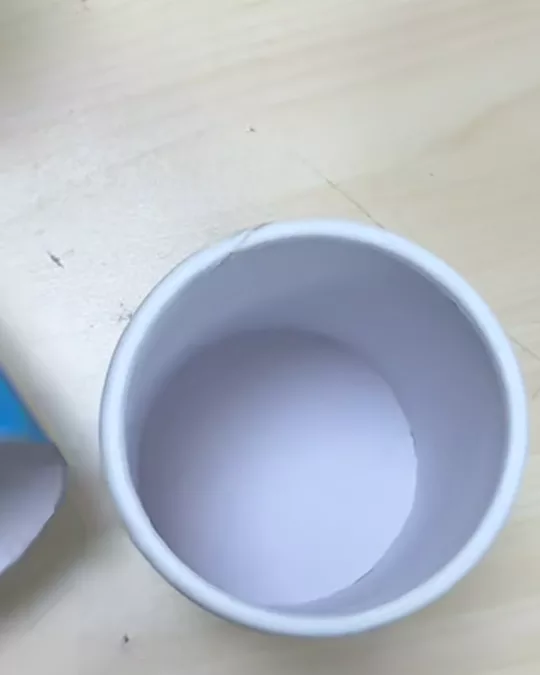
A coated white interior and a flat base. This is the view that settles wall thickness, and how far a heavy container settles into the tube under its own weight before the lid is offered up.
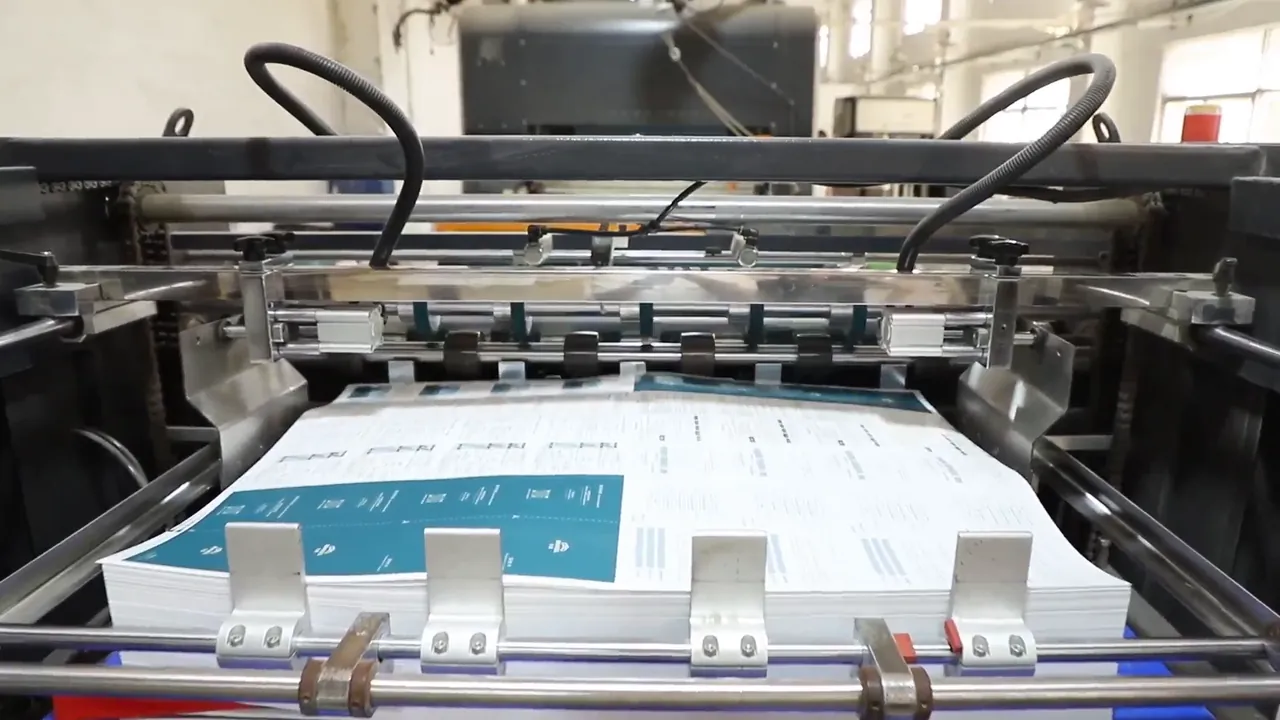
A press on the Guangzhou floor, photographed while it runs. Capacity, equipment and the on-site audit reference are published together on the factory page, rather than summarised as modern facilities.
The artwork on these boxes belongs to the customers who approved it and appears here with their agreement; the copy beside it does not name them. The plant photograph is the only frame taken inside the factory — the other four were shot on a bench in the sample room.
The board, print method and finish named above are explained in the packaging options reference — what each option does, which materials it works on, and where it stops working.
All of it is made in our two plants in Nanhai, Foshan, and Panyu, Guangzhou: Metapackink is the manufacturer rather than a broker, so the board is cut, the wrap printed and the box assembled on our own floors, where the sample comes from.
Everything else — minimum order, lead times, Incoterms, shipping — is the same whichever box you buy, and is set out under the table.
| OEM / ODM | We offer complete OEM and ODM for cylinder boxes. ODM means fitting an existing diameter and lid to your product; OEM means developing the diameter, wall, lid and fitment from the item and the way it ships. |
|---|---|
| Checked on the sample | A cylinder sample is approved with the product seated and the lid lifted on and off, because a lid that binds on a circle only shows when the box is loaded and the wrap is on. |
| Warranty | Cylinder boxes are warranted against the approved sample for diameter, lid fit, wall roundness and fitment clearance. |
Minimum order quantities are generally based on diameter and product specifications. Standard custom orders typically start at 500 pieces per diameter and specification. Available stock diameters, simpler structures and repeat orders may allow lower quantities; special materials, complex structures and custom inserts may require higher minimums. Your written quotation confirms the minimum for your specification. Samples take 4 – 6 working days from approved artwork. Sample lead time is a separate stage from production; courier time is additional. Production takes 10 working days from the later of receipt of the cleared deposit or written sample approval. Transit time is additional. Shipping terms: EXW, FOB, CIF or DDP, sea, air or courier. Sequence and inspection: process · quality control.
A round rigid box made either as a wound paper tube or as a wrapped greyboard cylinder, with a lid that seats on the wall rather than over four corners.
Yes. A die-cut disc collar catches the bottle at the shoulder: the aperture is larger than the cap and smaller than the body, so the bottle drops in and the foot carries the load. The cap sits in a recess in the lid, and the clearance is checked on the sample with the bottle filled.
A paper tube has a thin wall, a continuous seam and lower tooling, and suits tea, cosmetics and supplements. A wrapped greyboard cylinder is thicker, heavier and hand-finished, and is the construction used for fragrance and premium gift. The choice follows product weight and the finish, not the price alone.
Yes. A wound tube is made on a mandrel cut to the diameter you need, so a custom diameter is the normal case rather than a special order. The internal diameter is set from your container and confirmed on a loaded sample; the working band is 50 – 150 mm for a wound tube and 40 – 200 mm for a wrapped greyboard cylinder.
Yes — foil, emboss, deboss, spot UV, soft-touch lamination, textured or fabric wrap and a printed interior all carry over. Two adjustments apply on a circle: an emboss is kept small so it does not distort around the circumference, and a textured wrap is tested for cracking where it rolls over the seam.
Where the box touches food, the liner and the ink are specified food-grade and the migration route is tested for the destination market. A cylinder for confectionery also gets a divider star so the pieces do not settle into one block in transit.
A manufacturer. The plants are ours — Nanhai, Foshan, and Panyu, Guangzhou — and the tube is wound, the wrap printed and the lid made on them rather than bought in and resold. The audit reference a buyer can check is MIC-ASI261850.
Mostly. Round tube packaging is the name used when the tube is the container as much as the box — a tea or coffee caddy, a candle jar, a supplement pack. A cylinder box is the same wall with a lid built for the reveal. Either way the order of decisions is the same: internal diameter first, then lid style and fitment.
500 pieces for a standard diameter; smaller runs are possible on stock diameters and are confirmed on the quotation rather than assumed.
A wrapped cylinder is never perfectly round: the paper seam makes it slightly oval, and a lid cut to the base outside diameter inherits that oval, so it grips at one point and rattles at another.
The clearance has to be set from the thickness of the wrap used on the actual job, and the lid seam is rotated half a turn from the base seam during assembly so the two ovals oppose each other instead of adding. A shoulder-neck lid, which stops on an inner neck rather than sliding over the wall, removes most of the problem by construction. Test the sample closed with one hand, then carry the loaded box by the base.
Let the foot of the bottle carry the weight, and let everything above it only locate the bottle.
Glass is strongest in compression through the thick section at the foot and weakest at the neck, where the thread concentrates stress. A die-cut board disc with an aperture larger than the cap and smaller than the body catches the shoulder while the foot rests on the base panel; a foam or EVA silhouette that grips the whole height can hang the bottle from its shoulder, which is what cracks in a drop test. Leave clearance above the cap so the lid panel can deflect on impact. Load the filled bottle, close the lid, turn the box upside down and carry it by the base before approving the sample.
Shape, insert and industry change what cylinder boxes can do without changing the structure underneath. Board and finishing are shared across the factory.
Finishing and board options are shared across the factory — how each is applied is on the manufacturing process page, and the structures they can be built into are on packaging solutions.
Commonly bought for Fragrance Beauty and skincare Gift and presentation