Mixed container shapes
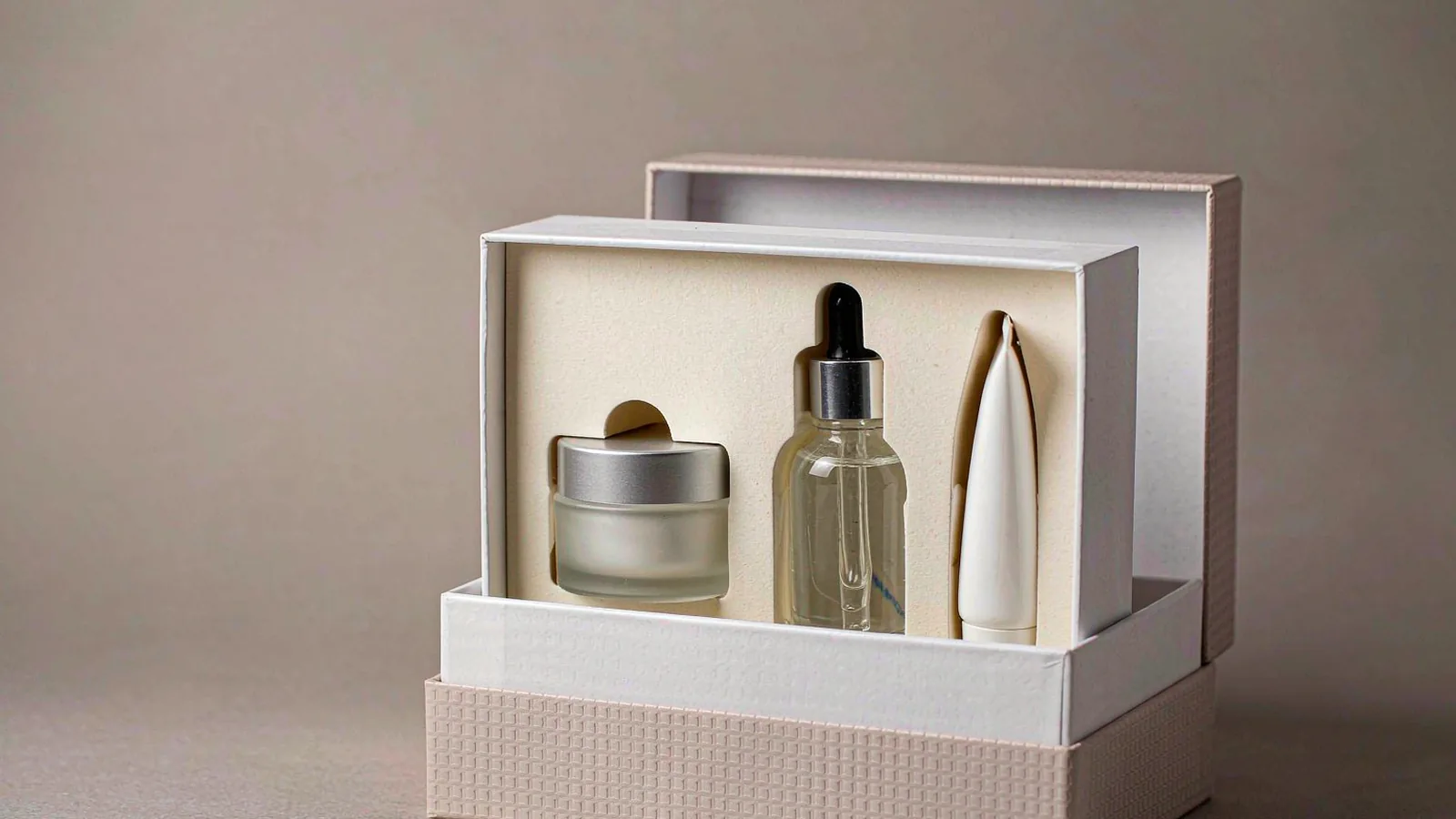
A routine set with a jar, a dropper bottle and a tube needs three different cavities in one box.
Cosmetic packaging is the box and fitment built around jars, droppers and sets; compare the structures — rigid, magnetic, drawer or folding carton — then build around your containers. This page is the structure overview; the beauty-sector view covers leak paths, dropper cutouts and transit.
| Quantity | Unit price |
|---|---|
| 500 pcs | $0.25 – $1.50 |
| 1,000 pcs | $0.18 – $1.00 |
| 5,000 pcs | $0.10 – $0.70 |
Prices are indicative reference unit prices per box in USD, based on the stated order quantities. Actual pricing depends on box dimensions, materials, printing, finishing, inserts, order specifications and shipping terms. Final prices are confirmed through a written quotation.
Reference prices reviewed
Metapackink is a custom cosmetic packaging manufacturer based in Guangzhou, China. The company offers custom cosmetic packaging, with customization options for dimensions, materials, printing and finishing. Minimum order quantities are generally based on box size, structure and specifications. Standard custom orders typically start at 500 pieces per size and specification. Available stock sizes, simpler structures and repeat orders may allow lower quantities; special materials, complex structures and custom inserts may require higher minimums. Your written quotation confirms the minimum for your specification.
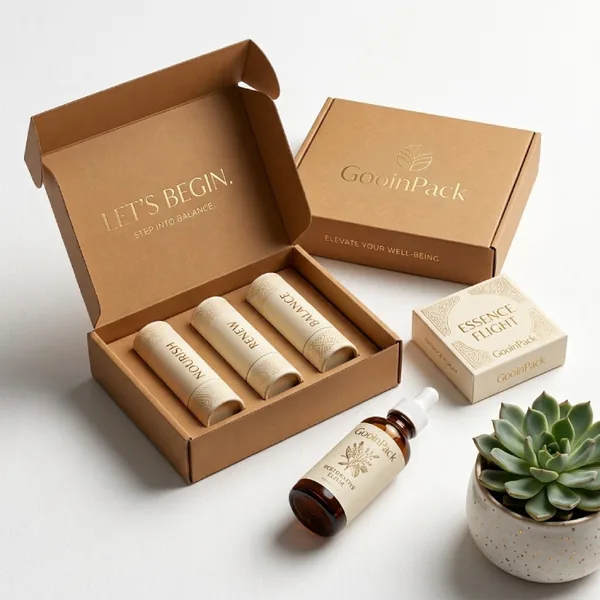
Cosmetic packaging spans a wider range of container shapes than almost any other category — a heavy glass cream jar, a slim serum dropper, a wide compact, a tube, a pump bottle — and each one has different fit and protection requirements inside the same box.
So the insert does most of the work. We design the cavity around the specific container, and where a set mixes shapes we build a compartmented fitment so every piece is held individually rather than loose in the same space.
A routine set with a jar, a dropper bottle and a tube needs three different cavities in one box.
Cream jars and glass bottles carry real weight; board thickness and cavity depth follow it.
Boxes that have to stack squarely, face out cleanly and survive handling on a retail floor.
Packaging that ships direct to the customer has to protect through a courier network, not just look good on a shelf.
Several products of different heights presented as one routine.
Palettes and compacts where the box has to survive being opened on a counter.
Professional ranges sold at the point of treatment rather than on a shelf.
Repeated orders where the structure stays constant and the artwork changes.
Cosmetics spans more container shapes than any other category — a heavy glass cream jar, a slim serum dropper, a wide compact, a tube, a pump — and each one has a different fit and protection requirement inside a box that still has to read as one brand.
A routine set with a jar, a dropper and a tube needs three different cavities in one box. Each container is held individually, so a heavy glass jar and a thin dropper bottle cannot move against each other in transit. That is a fitment question rather than a box question, and it is why the contents list matters more than the hero product.
Customise this boxA cream jar is specified against its filled weight as much as its outline, because the weight decides how deep the cavity has to be to hold the jar without straining the base. Where the product is oil-based we face or laminate the interior, because oils wick into raw board and show through as a stain weeks after the box looked perfect.
Customise this boxLighter items and refill pouches often work in a folding carton at a much lower unit cost. Rigid and magnetic structures earn their price when presentation, protection or product weight justify them, and we will tell you plainly which side of that line your product falls on rather than quoting the more expensive one.
Customise this boxBrand marks and fine decorative detail in metallic or specialty foil.
Gloss pattern over matte, widely used across beauty packaging.
A velvety matte surface that photographs well and feels premium.
Tactile brand marks, often combined with foil.
Full-colour artwork, including photographic and gradient reproduction.
Textured and coated stocks for a distinctive surface under the hand.
| Structures | Rigid lid-and-base, magnetic closure, drawer, folding carton |
|---|---|
| Colour | Any Pantone, CMYK or metallic shade; soft-touch and matte finishes available |
| Printing | Offset CMYK or Pantone spot colour, with foil, emboss, deboss or spot UV over it |
| Products covered | Cream jars, serum bottles, droppers, tubes, pumps, compacts, sets |
| Board | Greyboard 1.5 mm – 2.5 mm for rigid structures |
| Fitment | Individual cavities, compartmented trays, foam or EVA where needed |
| Insert cards | Printed card, leaflet, or mirror insert |
| Wrap materials | Coated paper, specialty and textured paper, printed paper |
| Finishing | Foil, emboss, deboss, spot UV, soft-touch lamination, screen print |
| Tolerance | Die-cut panels to ISO 2768-1 class m: ±0.2 mm up to 30 mm, ±0.3 mm up to 120 mm. An assembled box carries a wider allowance, because the wrap is applied by hand. |
| Assembled size | Finished outer dimensions ±0.8 mm, measured across the lid once the wrap has settled |
| Smallest box | L 80 × W 50 × H 15 mm formed. |
| Print sheet | Sheet-fed offset up to 1,100 × 1,600 mm; flexo up to 1,397 × 2,413 mm |
Specifications are confirmed on your written quotation. Anything not written into the specification is not part of the order.
Board thickness is specified to ISO 534, the standard method for the thickness, density and specific volume of paper and board, so a millimetre in a specification means the same thing to both sides.
Colour is controlled to ISO 12647-2, offset process control, measured against a physical Pantone reference rather than a screen.
The board, print method and finish named above are explained in the packaging options reference — what each option does, which materials it works on, and where it stops working.
All of it is made in our two plants in Nanhai, Foshan, and Panyu, Guangzhou: Metapackink is the manufacturer rather than a broker, so the board is cut, the wrap printed and the box assembled on our own floors, where the sample comes from.
Everything else — minimum order, lead times, Incoterms, shipping — is the same whichever box you buy, and is set out under the table.
| OEM / ODM | We offer complete OEM and ODM services for cosmetic and skincare packaging. ODM means fitting our existing jars-and-bottles structures to your range; OEM means developing every cavity from your containers. |
|---|---|
| Checked on the sample | Where the order is a set, the sample is checked with every container fitted and filled to its working weight, so nothing is approved on an empty mock-up. |
| Warranty | Cosmetic packaging is warranted against the approved sample for fitment clearance and interior facing, covering the two faults specific to this category: interior oil staining and cap or actuator stress. |
Minimum order quantities are generally based on box size, structure and specifications. Standard custom orders typically start at 500 pieces per size and specification. Available stock sizes, simpler structures and repeat orders may allow lower quantities; special materials, complex structures and custom inserts may require higher minimums. Your written quotation confirms the minimum for your specification. Samples take 4 – 6 working days from approved artwork. Sample lead time is a separate stage from production; courier time is additional. Production takes 10 working days from the later of receipt of the cleared deposit or written sample approval. Transit time is additional. Shipping terms: EXW, FOB, CIF or DDP, sea, air or courier. Sequence and inspection: process · quality control.
Yes, and it is one of the most common requests. Each container gets its own cavity in a compartmented fitment, so a heavy glass jar and a thin dropper bottle are both held securely without moving against each other in transit.
The dimensions of each container, and ideally a physical sample of each. For cream jars the filled weight matters as much as the dimensions, because it determines how deep the cavity has to be to hold the jar without straining the base.
Not always. Lighter items and refill pouches often work fine in a folding carton at a much lower unit cost. Rigid and magnetic structures earn their cost when presentation, protection or product weight justify them — we will tell you which side of that line your product falls on.
Yes, though it needs designing for it. E-commerce transit is harsher than retail pallet transit, so the cavity needs to hold through a courier network. Tell us it is shipping direct and we will specify the fitment accordingly.
Yes — printed insert cards, leaflets and mirror inserts are produced as part of the assembly, so the box arrives ready to pack rather than needing components from a second supplier.
Shape, insert and industry change what cosmetic packaging can do without changing the structure underneath. Board and finishing are shared across the factory.
Finishing and board options are shared across the factory — how each is applied is on the manufacturing process page, and the structures they can be built into are on packaging solutions.
Commonly bought for Cosmetics and skincare Retail and branded goods