Packaging for heavy glass perfume bottles
A heavy glass flacon is held at two points, not in one tight cavity: a base pad carries the weight and a shoulder collar stops rotation and lift. Board moves from 2.0 mm to 2.5 mm, the closure is specified against the force that opens it, and the packed box is verified on a loaded corner drop.
A 100 ml glass flacon weighs more empty than most filled cartons, and it breaks a box at a predictable place: not the wall, but the gap between the bottle base and the box base.
The direct answer is to build from that interface outwards. Support the bottle at two points — a base pad that carries the weight and a collar that locates the shoulder — deepen the base, move the greyboard from 2.0 mm to 2.5 mm, and choose a closure by the force that tries to open it rather than by how it feels in the hand. Keep the bottle upright, and verify the packed box on a drop test before the run is approved.
The failure is between the bottle and the box
Most heavy-bottle damage is not a crushed wall.
It is a cracked base, a sheared pump or a cap driven into the shoulder, and all three come from the same cause: the bottle was allowed to move relative to the box. On a corner impact the deceleration is short and the force is high; if there is any clearance between the bottle foot and the support under it, the bottle travels that distance and arrives at the base as a hammer rather than as a mass being carried. A box that passes a drop test empty can fail the same test loaded, and the difference is entirely in the fitment.
Glass makes this unforgiving because it is stiff and brittle.
A plastic bottle deforms and spreads the load; a glass one does not, so every millimetre of unsupported travel becomes a point load at the foot or at the shoulder. The heaviest part of a flacon is usually its base, and the thickest glass is there for exactly that reason — but it is also where a crack starts when the load arrives through a narrow edge. Board, foam and pulp are all softer than glass; the design question is which of them sits between the glass and the impact, and how far the glass can move before it meets them.
Two points of location, not one tight cavity
A bottle standing in a cavity has three freedoms it should not have: it can slide across the floor, it can rotate about its vertical axis, and it can lift and fall back. A cavity cut to the body diameter addresses the first and none of the others. Two points of location remove them: a base pad cut to the footprint of the foot carries the weight, and a collar at the shoulder holds the upper half against rotation and lift. The insert does the first, the collar does the second, and neither works alone.
Material follows from the load. A die-cut paperboard collar is adequate for a 50 ml bottle, because the mass is low and the load case is movement rather than weight. Under a 200 g flacon in a corner drop, board compresses and stays compressed, so the clearance it was meant to hold is gone before the second impact. EVA, EPE or moulded pulp recover, which is why heavy bottles are where foam stops being an upgrade and starts doing work. The insert options compared for rigid boxes set out the same choice by clearance, assembly and cost; on a heavy bottle the order of the criteria changes, with recovery first.
The collar has to stand above the shoulder and below the cap. Set it on the shoulder and it loads the weakest part of the moulding; set it at the cap and it can depress an atomiser or lever the closure off. A collar standing 2–3 mm proud of the shoulder, with the closure clear above it, lets the lid land on the fitment rather than on the glass. That is the same rule a travel spray follows, for the same reason: the load path must not run through the closure.
Board thickness, and the base that carries it
Board thickness is the second decision, and it is the one most often argued about first. Moving from 2.0 mm to 2.5 mm greyboard buys stiffness across the base panel and at the corners, which is where a heavy bottle loads the box. It also takes 0.5 mm of cavity on each side, so the box has to grow or the fitment has to shrink. On a shelf-fixed outer dimension the trade is real: the extra millimetre is paid for once at the merchant and once in the space the product no longer has. The board thickness guide sets out that arithmetic for a square box.
The base matters more than the wall on a heavy bottle. A deeper base puts the bottle foot lower relative to the side walls and gives the pad somewhere to sit, and a wrapped corner with a proper overlap resists the split that a corner drop starts. A thin lid on a stiff base is fine; a stiff lid on a thin base is not. Where a magnet is fitted, the base also carries the pull of the closure, so the two decisions belong together rather than in separate emails.
Density is the number a quotation usually leaves out. Two sheets both measuring 2.5 mm can sit at 0.72 and 0.79 g/cm³, and on a 200 mm base panel that is a visible difference in how far the panel bows under a loaded bottle. Name thickness and density together, and check a cut edge on delivery: a loose sheet crumbles at the rim and dusts a light wrap. Those checks are the same ones a rigid box in any sector needs; a heavy bottle simply makes the consequence of skipping them immediate.
The closure has to resist being pushed open
A magnetic closure is an opening experience, not a retention device. On a light box it does both jobs well enough, because the force trying to open the lid is small. On a heavy box the bottle's mass multiplied by a parcel handling shock is considerably larger, and a magnet specified for feel can be peeled open by the contents on a hard set-down. Retention is the requirement; the click is a consequence.
Where the weight climbs, a tab-and-slot, a friction sleeve or a clip carries the anti-self-opening duty, and the magnet is either uprated or left off. The working rule is to specify the closure against the filled weight and the journey, then choose the opening gesture. A buyer who starts from the gesture usually ends with a box that opens beautifully on a desk and opens itself in a van.
Cap clearance is part of the same stack. A heavy flacon often has a substantial overcap, and the lid has to close over it without pressing on it. A lid that lands on the cap drives the load straight down the neck; a lid that lands on the collar or the box wall leaves the closure unloaded. Two millimetres of clearance above the cap is cheap at the drawing stage and a re-cut die afterwards.
Upright, and specified upright
Upright is the stable orientation for a tall heavy bottle, because the load travels down the wall into the base, which is the stiffest part of the box. Laid flat, the weight bears along one line of the wall and through the shoulder of the bottle, and the shoulder is the least controlled dimension on a moulded flacon. It is also the orientation in which a slow closure leak shows up: a bottle stored on its side for months keeps the closure wetted, and a crimp or screw neck that weeps under that condition does so in the warehouse rather than in a test.
That makes orientation a specification rather than a packaging preference. A box designed to stand upright should be packed, cartoned, marked and stacked upright, and the case pack should be chosen so cartons cannot be turned without it being obvious. Where a range has to lie flat for shelf reasons, the fitment has to cradle the shoulder along its length rather than at a point, which is a different insert and a different cost. The saving in box height is real; so is the extra fitment.
Prove it on the packed box
A specification review cannot find any of these failures, because they are all failures of a packed box in motion. Drop testing follows GB/T 4857.5-1992, the Chinese national vertical-impact method equivalent to ISO 2248:1985: a defined sequence of corner, edge and face drops from a height set by the packed weight. The transit testing guide sets out how the sequence and the pass criterion are chosen; the point here is that the criterion has to be written before the first box is dropped, and that the box is dropped with the actual bottle, closure and fitment inside it.
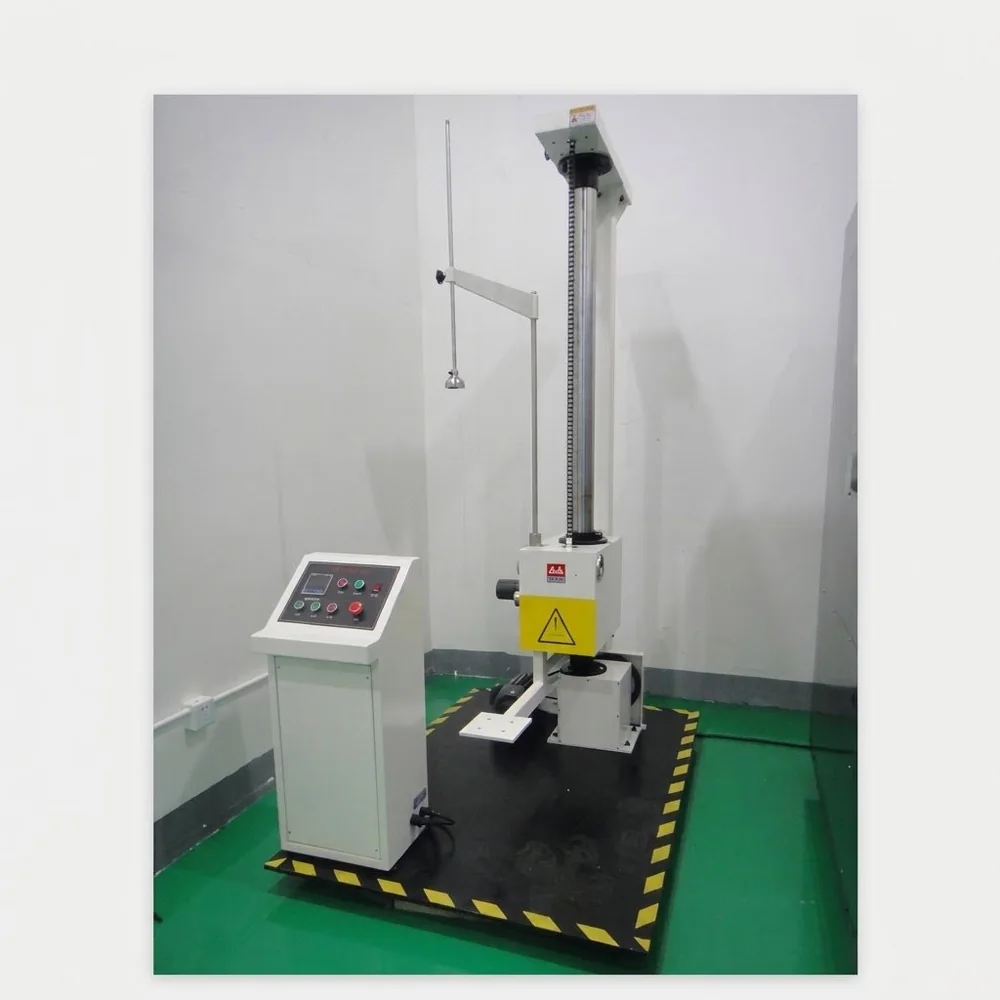
Conditioning belongs in the test too. Wrapped board takes up moisture, and a box pulled from a dry sample room is stiffer than the one that arrives after a week in a humid warehouse. Test the packed unit, with the production fitment and the production wrap, after conditioning. A pass on a white sample with a hand-cut foam pad is a pass on a different box.
The quality control page lists where these checks sit in the run: incoming board, first article, in-process and pre-shipment. A heavy-bottle programme adds one check to that list — a loaded drop on the first article off the line — because a change of board batch or insert density can move the result without moving any dimension on the drawing.
Working bands by filled bottle weight
The table below gives the bands this factory starts from when a filled bottle arrives with a weight and no structure. They are working ranges for a white sample, not published limits and not a quotation; bottle geometry, closure type and the route the parcel takes all move them.
| Filled bottle weight | Board | Fitment | Closure | Note |
|---|---|---|---|---|
| 50–80 g | 2.0 mm | Paperboard collar and base disc | Magnet | Low mass; the load case is movement, not weight |
| 80–150 g | 2.0–2.5 mm | EVA shoulder collar plus base pad | Magnet, pull uprated | Check the cap clearance before the lid is drawn |
| 150–250 g | 2.5 mm | Moulded pulp cradle with a surround | Magnet plus a clip | Retention is specified against a loaded corner drop |
| 250 g and above | 2.5–3.0 mm | Full EVA or flocked cavity | Clip plus magnet | Confirm the case pack stays upright through the route |
These are working bands, not a standard and not a quotation. Filled weight includes the cap and any overcap; the fitment, the board density and the drop sequence are resolved on a white sample before a die is cut.
Manufacturing Insight from Metapackink
A 150 ml square flacon came in for a rigid box at 2.0 mm board with a base-only disc: the bottle stood on the disc and the walls held it upright. It passed a face drop and a flat set-down. On a corner drop the bottle foot cracked, and it cracked at the base rather than at the shoulder.
We re-cut the sample rather than the specification. The board went to 2.5 mm, the base gained a pad ring that supported the whole footprint of the foot instead of a disc under its centre, and a shoulder collar was added to stop the upper half rotating. The same drop sequence, same height, same bottle, passed. What had changed was not the strength of the wall but the distance the glass could travel before it met something.
The judgement we took from it was that the interface is the structure: on a heavy bottle, first fix what sits between the glass and the box, then argue about how thick the wall should be. We now ask for the filled weight and the closure drawing before we quote a board, and we put a loaded corner drop on the first-article checklist for any bottle over about 150 g. The cost of that order of work is one question at the brief; the cost of the reverse is a pallet of boxes that are dimensionally correct and break their contents.
What to write into the specification
Five lines settle most heavy-bottle arguments before a sample is made.
State the filled weight including the cap and any overcap, and say where the centre of gravity sits if the bottle is unusually tall. Name the two fitment points — the base pad and the shoulder collar — with the material and wall thickness of each. Name the board thickness and its density rather than the thickness alone. State the closure by the retention force it has to resist, not by the gesture it makes. And write the drop sequence, the conditioning and the pass criterion into the purchase order, so a failure is a measurable event rather than an opinion.
The rest follows from those. The perfume and fragrance sector sets out how bottle weight and centre of gravity decide a structure in the first place; the luxury perfume packaging and perfume packaging ranges list the constructions these bands are specified against. The glossary entry for an insert and the definition of a collar keep the two locating points distinct, which is the distinction the whole load path depends on.
Questions this page gets asked
Does a heavy bottle need a magnetic closure?
Not for protection. A magnet is an opening experience; retention is a different requirement, and on a heavy box the force trying to push the lid open comes from the bottle mass multiplied by a handling shock. A tab, sleeve or clip carries that duty, with the magnet either uprated or left off. Specify retention against the filled weight and the journey, then choose the gesture.
Should the insert be foam or paperboard?
For a light bottle, paperboard is enough, because the load case is movement rather than weight. Under a 200 g flacon in a corner drop, a die-cut board collar compresses and stays compressed, so the clearance it was holding is gone before the second impact. EVA, EPE or moulded pulp recover. On a heavy bottle foam is doing real work rather than being an upgrade.
Can the bottle lie flat to save box height?
It saves height, but the fitment has to cradle the shoulder along its length rather than at a point, which is a different insert and a different cost. Laid flat, the weight bears on one line of the wall and through the shoulder — the least controlled dimension on a moulded flacon — and a bottle stored on its side keeps the closure wetted. Upright is the stable orientation, and it has to be specified through packing, cartoning and stacking.
Which drop test applies, and what counts as a pass?
Drop testing follows GB/T 4857.5-1992, the Chinese national vertical-impact method equivalent to ISO 2248:1985: a corner, edge and face sequence from a height set by the packed weight. The pass criterion is written before the first box is dropped, the box is tested with the production bottle, closure and fitment inside, and the sample is conditioned first. A white sample with a hand-cut pad is a different box.
Figures on this page are typical for the construction described, not a quotation. Precision increases once your product dimensions, quantity and destination are known, and the written quotation is the document that governs.
Board thickness is specified to ISO 534, the standard method for the thickness, density and specific volume of paper and board, so a millimetre in a specification means the same thing to both sides.
Drop testing follows GB/T 4857.5-1992, the Chinese national vertical-impact method, which is equivalent to ISO 2248:1985.
Send the dimensions and get a structure back
Product dimensions, quantity and where it ships. That is enough for us to propose a structure and an indicative price.