Board grade and flute
B-flute is around 3 mm, C around 3.6 mm, E around 1.2 mm. The flute sets the slot width and how far a score can bend before the liner cracks, so a blank drawn at B-flute is not the blank for E.
A shipping box, a sleeve, a tuck-end carton, a two-piece rigid box and a divider grid — as 1:1 drawings in SVG and DXF. Change the dimensions on this page and the drawing follows. No form, no email address, no account.
Five structures, because five is the point where a packaging conversation stops being about a box and starts being about a system: something to ship in, something to slide, something to stand on a shelf, something to open as a gift, and something to hold the parts apart inside it. Each one is a blank we cut, not a shape traced from a photograph.
| Structure | Standard size | Blank | Download |
|---|---|---|---|
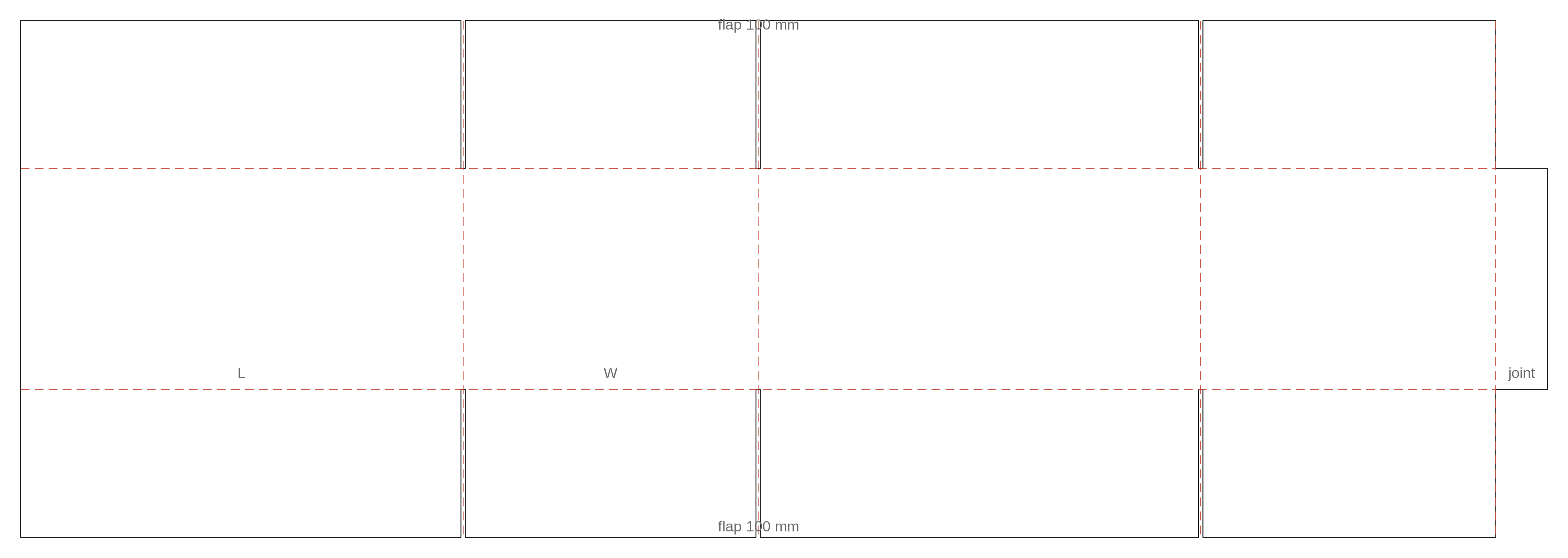
| Regular slotted container FEFCO 0201 shipping box Cut-ready |
300 × 200 × 150 mm | 1035 × 350 mm | SVG · DXF |
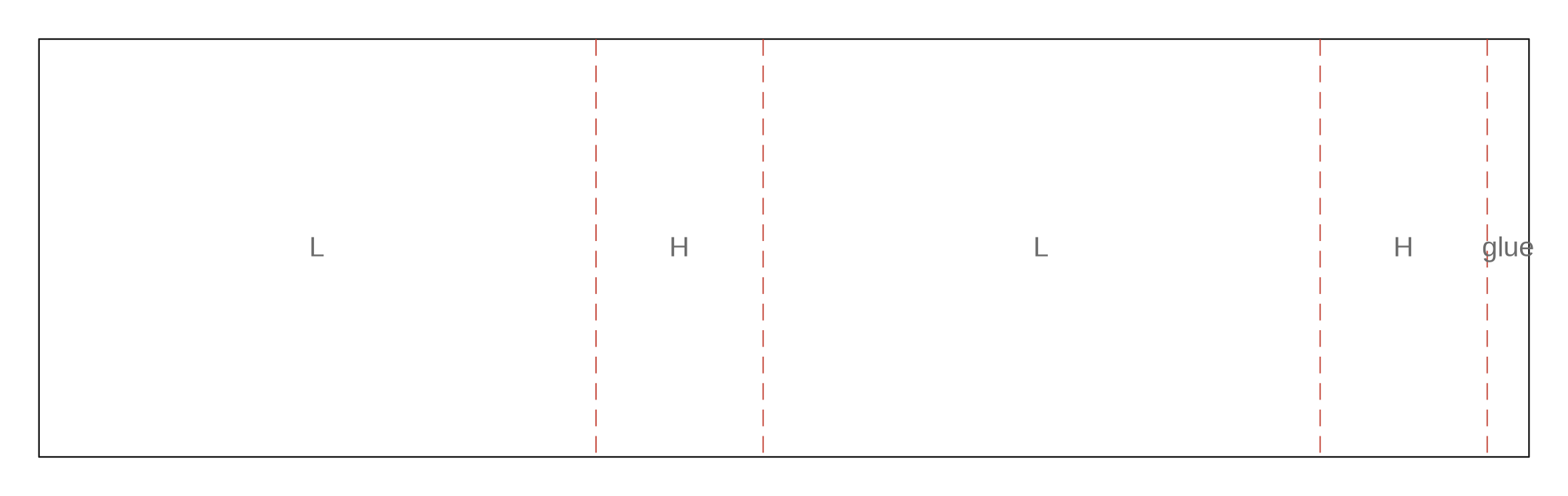
| One-piece sleeve tube, open both ends Cut-ready |
200 × 150 × 60 mm | 535 × 150 mm | SVG · DXF |
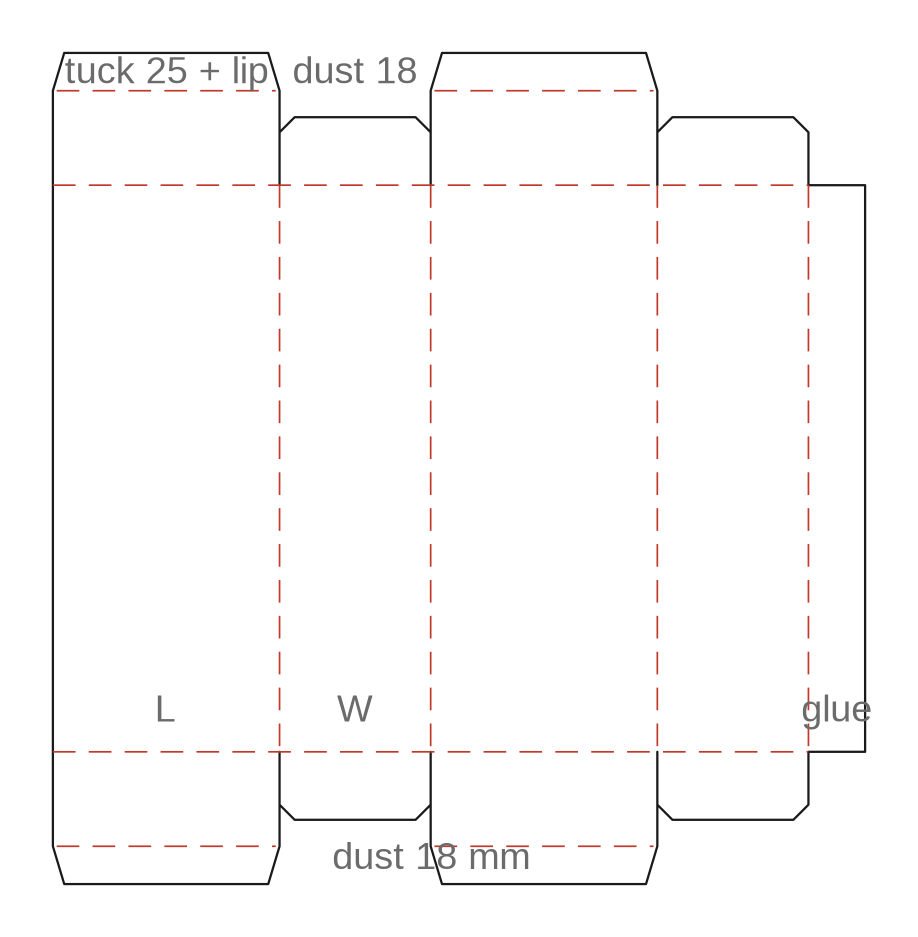
| Straight tuck-end carton folding carton, no lock Cut-ready |
60 × 40 × 150 mm | 215 × 220 mm | SVG · DXF |
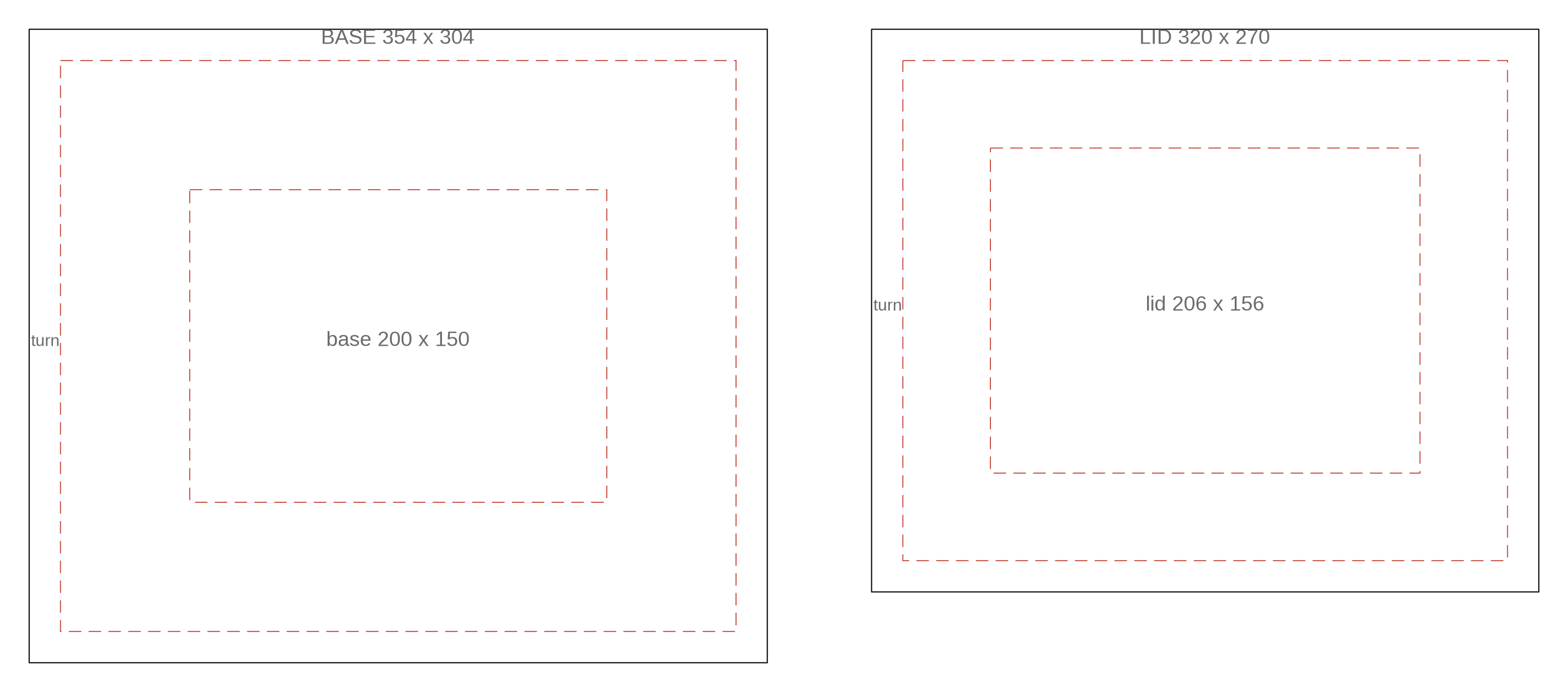
| Rigid lid and base two-piece wrap, paper Reference net |
200 × 150 × 60 mm | 724 × 304 mm | SVG · DXF |
| Divider grid 3 x 2 cells, internal strips Cut-ready |
3 × 2 cells | 260 × 120 mm | SVG · DXF |
Sizes in the table are the drawing's defaults, not limits. The DXF is in millimetres with the cut on one layer and the creases on another; the SVG carries its size in millimetres, so Illustrator and Inkscape open it at 1:1.
Pick a structure, then set the box. The drawing, the blank size and both files update as you type — the download always matches what is on screen.
Blank 1035 x 350 mmFlap depth 100 mm, two flaps meeting at the centreGlue lap 35 mm
Everything runs in your browser. Nothing is uploaded, and no dimensions are recorded.
A dieline is a flat drawing of a box that has not been folded yet. Two kinds of line do all the work: a solid line is where the material is cut away, a dashed line is where it is scored and folds. Everything else on the sheet — panel names, dimensions, the arrow that says which way the flute runs — is there so a person can check the drawing before anything is cut.
The thing that catches people out is that a dieline is not a picture of a box. It has no perspective, the panels are not in the order they appear when the box is closed, and the side you are looking at is the inside of the box for about half the panels. Read the creases instead of the shapes: they are the hinges, and once you can see the hinges the box assembles in your head.
Every drawing on this page is the same three numbers and a set of allowances. If you would rather build the blank in your own CAD than download ours, this is what to type.
| Structure | Blank width | Blank height | Fixed allowances |
|---|---|---|---|
| Regular slotted container | 2(L + W) + 35 | H + W | Flap depth W/2 each end; 3 mm slot at every score; 35 mm glue lap |
| One-piece sleeve | 2(L + H) + lap | W | Lap 35 mm on corrugated, 15 mm on folding carton |
| Straight tuck-end | 2(L + W) + 15 | H + 2 × max(35, W/2 − 2) | Tuck 25 mm plus a 10 mm lip; dust flap W/2 − 2; 4 mm corner clip |
| Rigid lid and base | L + 2(H + t + 15) | W + 2(H + t + 15) | Turn-in 15 mm; t = greyboard thickness; lid clearance 1 mm per side |
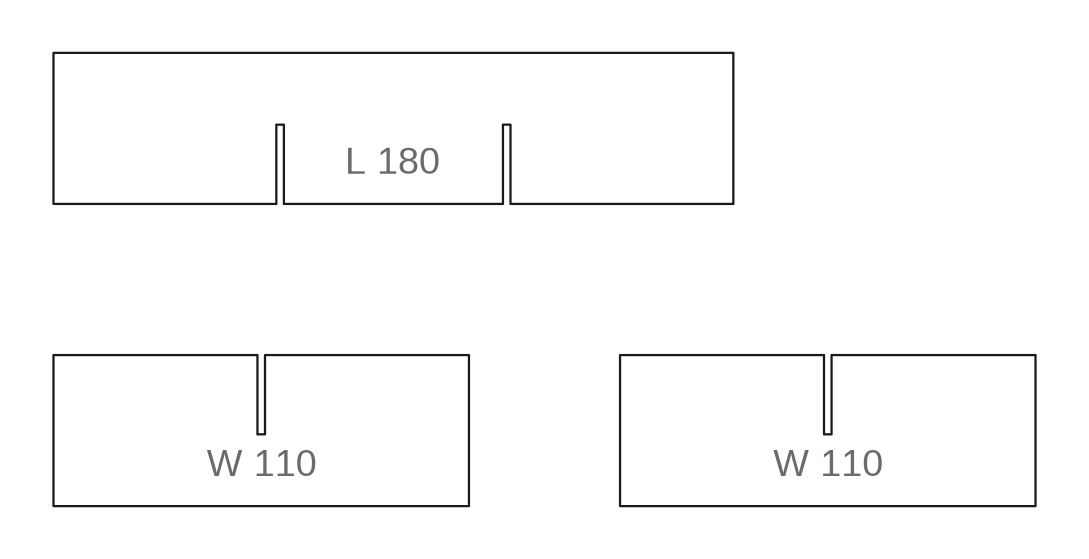
| Divider grid | Strips L × H and W × H | — | Slot width = board thickness; slot depth H/2 + t/2 |
The allowances are ours, and they are the numbers most likely to differ from your converter's. A plant running B-flute sets a different slot than one running E-flute; a plant wrapping 157 gsm art paper builds a different turn-in than one wrapping 200 gsm. Take the structure and check the allowances against the material.
A dieline fixes the geometry. Four other decisions move the blank, and all four are made against the material rather than on the screen.
B-flute is around 3 mm, C around 3.6 mm, E around 1.2 mm. The flute sets the slot width and how far a score can bend before the liner cracks, so a blank drawn at B-flute is not the blank for E.
Folding carton folds cleanly along the grain and fights it across. On a tall carton that decides whether the board runs with the height or across it, and it changes nothing about the outline — which is why it has to be marked rather than assumed.
Paper wrapped round greyboard has to lose material at each corner. Notch, pleat or mitre all work, and the choice depends on the paper, the board and the bulk the corner has to swallow.
A hand-cut sample and a die-cut production run are not the same object. We cut to about ±1 mm on a die; a printed dieline read off a screen and cut with a knife is a concept model, not a specification.
Because a drawing is the cheapest useful thing a box plant owns. It costs us nothing to publish, it saves a designer an afternoon of measuring a sample with a ruler, and the alternative — a template behind an email form — produces a mailing list rather than a relationship.
There is no catch and no licence. If a drawing here becomes a box, we would like to quote it, and there is a page for that. If you only needed the drawing because your own supplier cannot produce one, that is a fair reason too, and it tells us something about the market we would rather know.
Two things we ask: check the blank against your material before cutting, and do not treat a downloaded net as a die we have approved. A die is cut for a specific board on a specific machine, and the drawing is the part that comes before that.
Yes. Download them, edit them, cut from them, send them to your own converter. No attribution and no licence fee. They are reference drawings of a structure, not a die you have ordered from us, so check the blank against your board and your machine before you cut.
AutoCAD, DraftSight, Fusion, CorelDRAW, Illustrator and most die-makers' CAD read it. The file is DXF R12 with two layers, CUT and CREASE, in millimetres. R12 is the oldest and therefore the most widely readable variant; a newer one would carry nothing extra for a shape made of straight lines.
A dieline describes the structure: where the material is cut and where it folds. Print artwork needs a separate file with bleed, colour bars and the printer's own template, because the bleed allowance depends on the press and the substrate. Sending artwork on top of a structure drawing is how a job arrives at the printer with the trim in the wrong place.
Because the corner is.
A rigid box is paper wrapped around greyboard, and how the paper is relieved at each corner depends on the paper, the board thickness and how much bulk the corner has to swallow. Some plants notch it, some pleat it, some cut a mitre.
Drawing one of those and calling it cut-ready would be a guess dressed as a drawing, so the score lines and the turn-in are given and the corner is left to the die-maker. A magnetic closure box is the same wrap with a hinged spine between the two halves, and the spine allowance moves with the board and the magnet pocket — that one is drawn per project.
No. They are the sizes we cut most often for each structure, chosen so the drawing shows a realistic proportion rather than a square. Change them to your own; that is what the fields above are for.
Yes, and it is the usual next step. Send the drawing with the board grade and the quantity, and we check the blank against our cutting table before quoting. If the drawing came from here, say which structure it started as — it saves a round of questions.
Send the blank with a board grade and a quantity. We check it against our cutting table before quoting, so the answer includes anything the drawing would need changed.