Palletising and top load
Boxes at the bottom of a pallet carry the weight of everything above them. The specification has to account for sustained compression, not just for the weight of the product inside the box.
Retail and branded product packaging is packaging that has to carry product identity at the point of sale, and still look right when it arrives there.
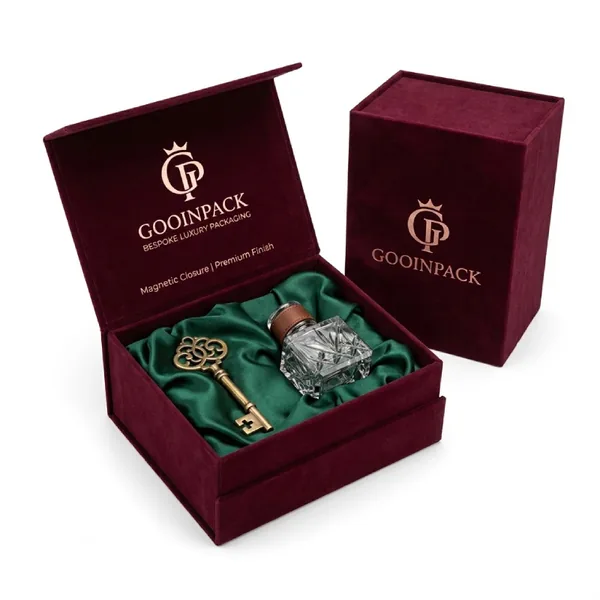
Retail packaging has to do two jobs at once, and they pull in different directions. On the shelf it has to identify the product and the brand in the second or two of attention a shopper actually gives it. Behind the shelf it has to survive being palletised, stacked, handled repeatedly and moved through a distribution centre without arriving dented at the corners.
The second job is the one that gets underestimated, because it happens out of sight. A box that looks correct in a product photograph can still fail at the point where it is stacked eight high on a pallet, or at the point where a DC rejects it for a barcode that is too close to the edge. Those failures are what this page is about.
Related reading: Retail book-style boxes that open like a cover.
Every one of these happens after the box has been approved by the brand and before a shopper ever sees it. They are the reason retail packaging is specified differently from gift packaging.
Boxes at the bottom of a pallet carry the weight of everything above them. The specification has to account for sustained compression, not just for the weight of the product inside the box.
A retail box is picked up and set down many times between the factory and the shelf. Corners and edges take the contact, so the structure has to hold its shape rather than relying on the graphic to hide damage.
Distribution centres move cartons through automated lines and manual pick stations. A box that is awkward to grip or that catches on a conveyor gets damaged or rejected.
Retailers require barcodes at a defined position with a quiet zone around them. Placing one too close to a fold, a curve or the box edge causes scan failures at the till or in the DC.
Containers and unheated warehouses expose paper to humidity that softens board. Stacking strength drops with moisture content, which is why compression performance is specified with a margin.
A box may sit on a shelf, under lighting, for months. Some films scuff, yellow or lift at the edges over that period even though they looked correct on the approved sample.
The shelf is a fixed set of constraints before it is a design opportunity. These are the ones worth designing against deliberately.
The box has to fit the retailer’s facing width and shelf depth. A box that is 5 mm too deep will not sit flush and will be pushed back or turned sideways.
Whether boxes are stacked, stood in a row or hung decides which face is the one that must work, and whether the lid needs extra support.
A shopper reads the front face from roughly a metre and then from close range. Type that works at one distance often fails at the other.
In many categories only one face and one edge are visible at a time. Spending the finish budget on hidden faces is a common waste.
Retail lighting is harsh and directional. High-gloss films flare under it and can make a correctly printed face unreadable.
Colour and structure are how shoppers navigate a category quickly. A box that reads as a different category gets passed over regardless of the product.
| Decision | Why it matters in retail | What we would specify |
|---|---|---|
| Board thickness | Sets stacking strength and resistance to corner damage under top load | Sized against pallet stacking height and product weight, not box size alone |
| Wrap protection | The surface has to survive handling before it reaches the shelf | Matte or gloss film lamination; soft-touch only where handling is light |
| Corner construction | Corners take the contact in palletising and repeated handling | Rigid construction with wrapped corners rather than exposed board edges |
| Closure | A lid that loosens in transit arrives sitting open on the shelf | Friction-fit or magnetic closure specified against the number of open/close cycles |
| Barcode placement | A barcode in the wrong position fails scanning at the till or in the DC | Placed on a flat face with the retailer’s required quiet zone, away from folds and edges |
| Moisture tolerance | Board softens in humid transit and loses compression strength | Compression performance specified with a margin for moisture uptake |
For higher-value retail products where the box has to hold its shape on a shelf and through handling.
A more compact lidded format that stacks well and closes cleanly each time it is handled.
Where the product is handled by the shopper before purchase and the lid should stay shut.
For products presented by being drawn out, and for flat items that sit better horizontally.
Structures that present multiple units at the point of sale rather than a single product.
Supporting retail items where the brand needs to carry through from the shelf to the bag.
| Structures | Rigid lid-and-base, two-piece rigid, magnetic closure, drawer, counter and display units |
|---|---|
| Board | Greyboard specified against pallet stacking height and product weight |
| Wrap materials | Coated paper, specialty and textured stock, printed paper |
| Surface protection | Matte or gloss film lamination as standard; soft-touch where handling is light |
| Barcode and labelling | Positioned to the retailer requirement with the required quiet zone, on a flat face |
| Internal fitment | Die-cut paperboard, foam or EVA cavity, compartmented tray, insert card |
| Finishing | Foil, emboss, deboss, spot UV, lamination, screen print |
| Sampling | Physical sample for approval before every production run |
Specifications are confirmed on your written quotation. Anything not written into the specification is not part of the order.
Board thickness is specified to ISO 534, the standard method for the thickness, density and specific volume of paper and board, so a millimetre in a specification means the same thing to both sides.
Tell us the retailer and the stacking height before the structure is fixed. Brand guidelines usually describe how the box should look, while the retailer’s own requirements describe how it has to behave — facings, barcode position, case pack and stacking height. Where those two sets of requirements conflict, the conflict is much cheaper to resolve on paper than after the die has been cut.
By specifying board thickness against the stacking height and the total weight above the bottom layer, rather than against the box size on its own. A box that feels rigid in the hand can still collapse at the bottom of a tall pallet, because the load it carries there is many times its own contents. Tell us the intended case pack and stacking height and we will size the board for it.
On a flat face, at the position your retailer specifies, with the quiet zone they require around it, and away from folds, curves and box edges. Scanning failures usually come from a barcode placed too close to an edge or across a fold, not from the barcode itself. Send us the retailer’s labelling requirement and we will position it in the die line.
Only where handling is light. Soft-touch is the more attractive surface in the hand, but it marks more readily than matte film and shows contact from repeated picking up. For a box that will be handled in a store or travel loose in a distribution centre, matte lamination is usually the safer specification. We will say which we would choose for your specific route to market.
Retail packaging is optimised for survival through a supply chain and for being compared against competitors at a glance on a shelf. Gift packaging is handed over in person and opened once, so the sequence of moments during opening matters more than shelf presence. The structures overlap heavily — the specification priorities do not. See the gift and presentation packaging page for the other side.
Yes, and it is a common requirement. The same structure can usually serve both channels, but the insert has to be designed for the harsher of the two journeys — which is almost always the direct-to-consumer parcel, because a parcel is handled individually while a retail case is not. Specifying for the gentler journey is the usual source of damage complaints.