A flanker launch
Same bottle, new name — the tray is already tooled.
A rigid tray with a printed sleeve over it. The tray is engineered once for the bottle; each flanker, season or market reprints the sleeve.
Metapackink is a custom sleeve perfume box manufacturer based in Guangzhou, China. The company offers custom sleeve perfume boxes, with customization options for dimensions, materials, printing and finishing. Minimum order quantities are generally based on box size, structure and specifications. Standard custom orders typically start at 500 pieces per size and specification. Available stock sizes, simpler structures and repeat orders may allow lower quantities; special materials, complex structures and custom inserts may require higher minimums. Your written quotation confirms the minimum for your specification.
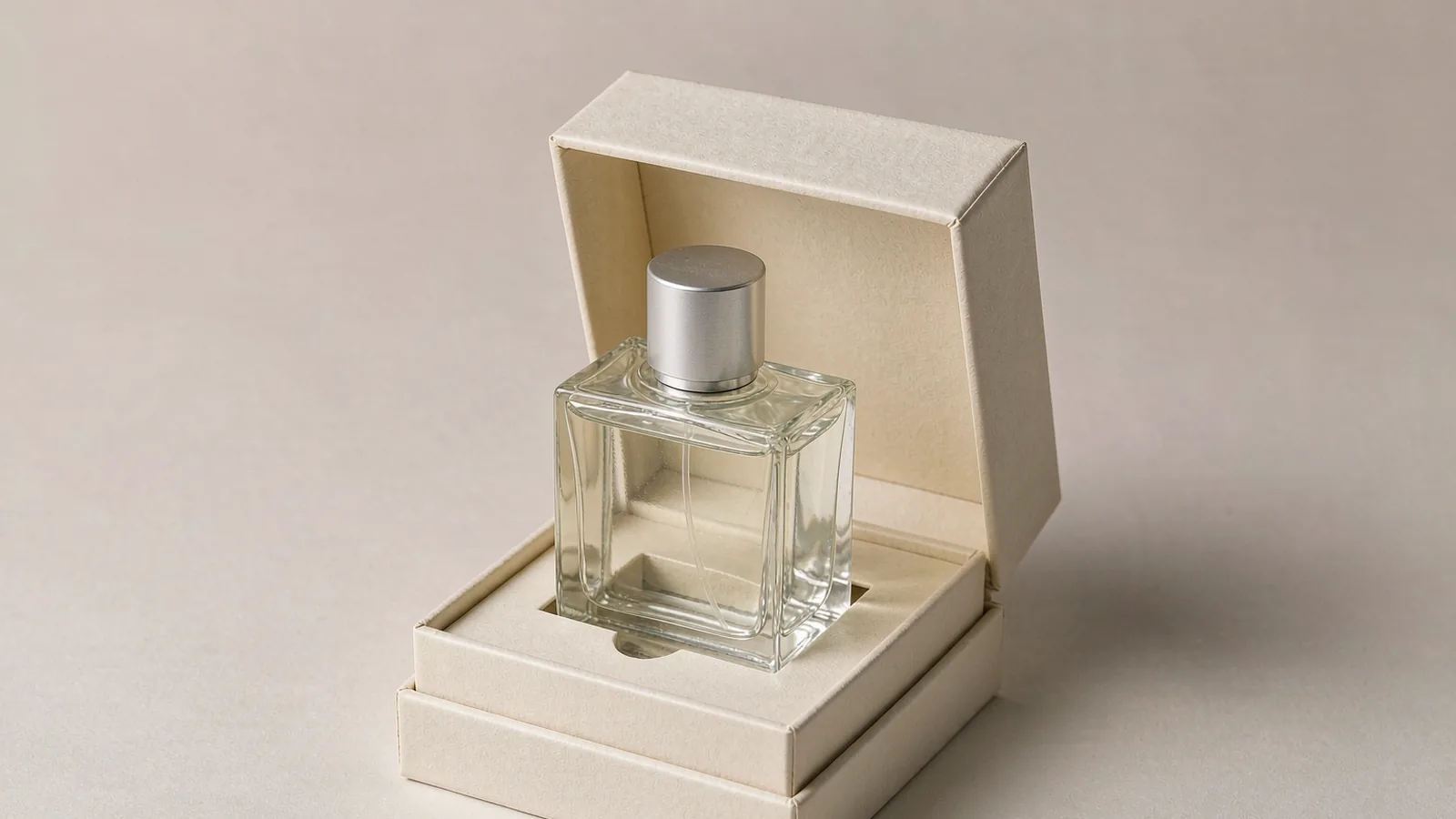
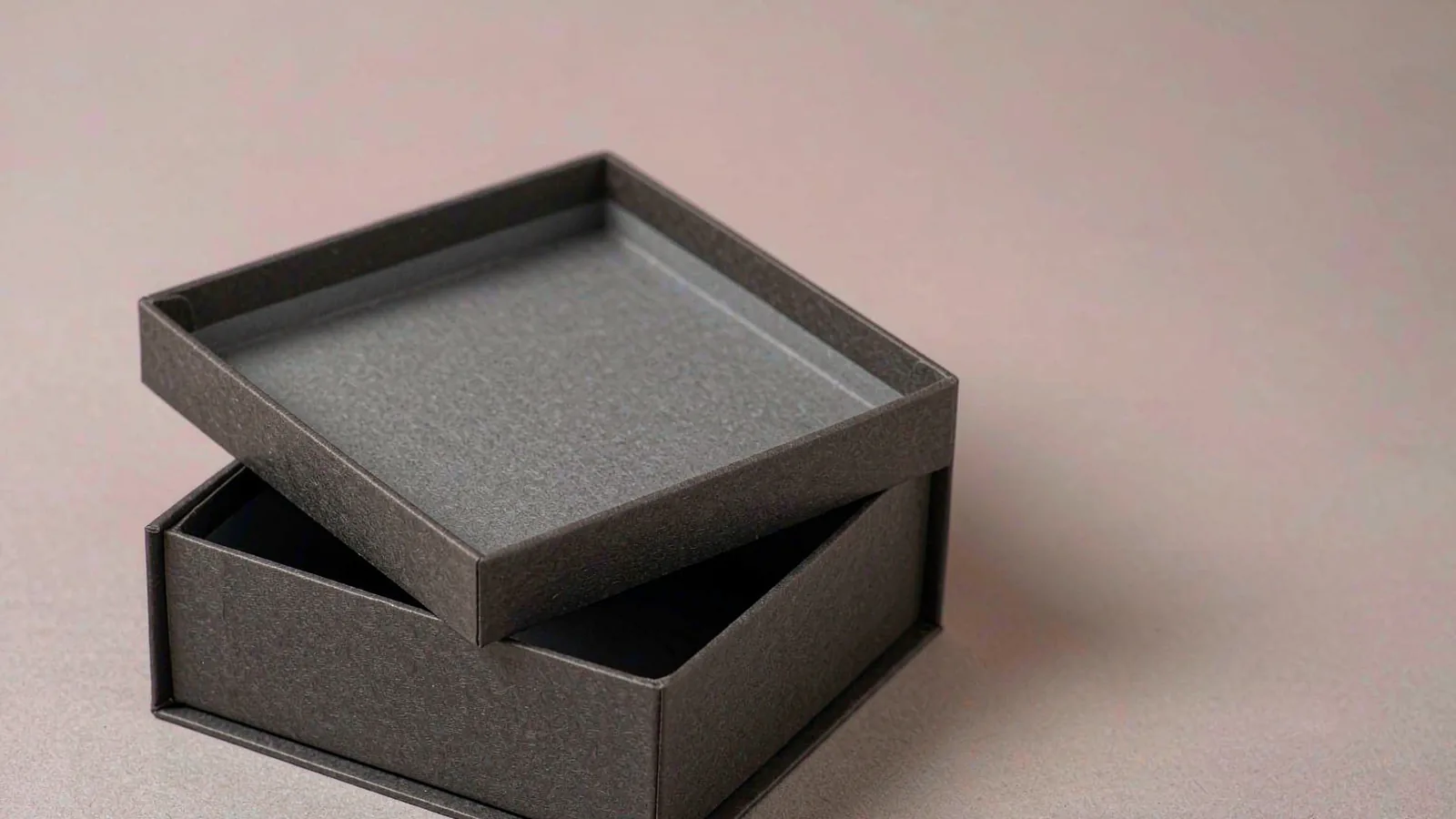
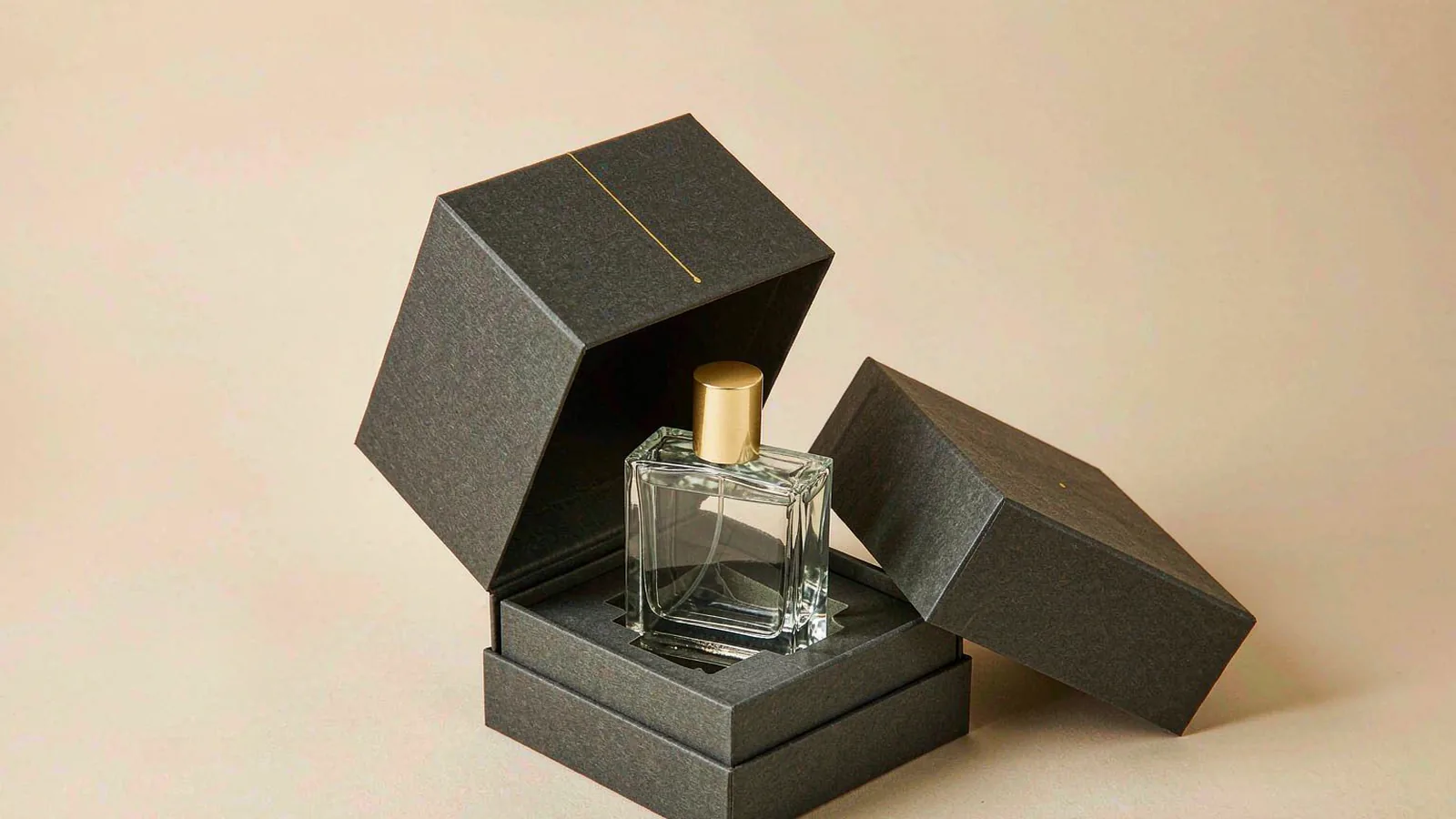
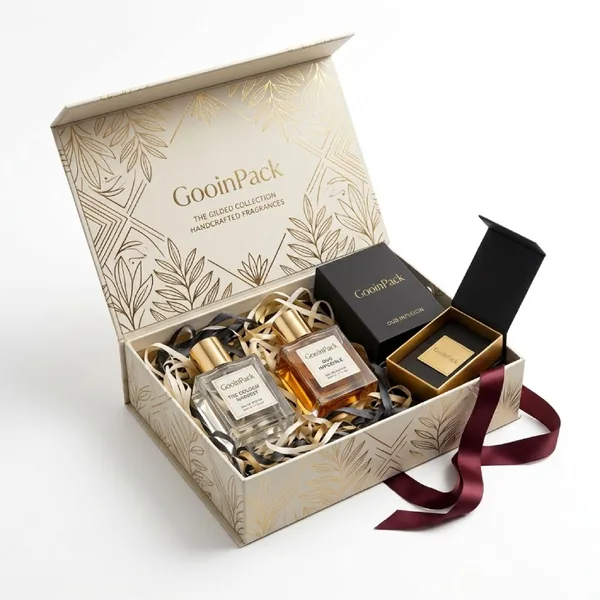
A sleeve perfume box separates the two jobs a fragrance box does. The tray protects the flacon and is tooled once. The sleeve carries the brand and the variant, and it is printed flat, so a new flanker costs a print run rather than a new structure.
The tolerance is the whole engineering problem. The sleeve has to be tight enough to stay on a box being lifted out of a bag with 400 g of glass inside, and loose enough to slide off by hand without tearing at the corner. That gap is set in millimetres and checked on the sample with the bottle loaded.
Same bottle, new name — the tray is already tooled.
One tray, a sleeve per language or market.
A holiday sleeve over the standard tray.
Less board and less assembly than a fully wrapped drawer.
A core flacon with two or three scent variants.
Market-specific sleeves over one tray.
A promotional sleeve on a trial size.
A small tray with a sleeve per scent.
The sleeve is printed flat and the tray carries the glass. The fit between them is what the sample is for.
Because the sleeve prints separately from the tray, a flanker needs a new print run and a new die for the wrap — not a new tray, collar or assembly line.
Customise this sleeveA loaded tray is heavy. The sleeve is sized to stay on when the box is lifted by the sleeve alone, and still slide by hand without tearing the corner.
Customise this sleeveA thumb notch or a ribbon lets the tray start moving. Without one, a tight sleeve on a smooth wrap is hard to open on a counter.
Customise this sleeveThe variant name carries the foil; the tray stays plain.
Matte over a coated tray for a two-tone feel.
Gloss on a matte sleeve, without a second pass on the tray.
A blind mark on the sleeve face.
| Board | Greyboard 1.5 – 2.5 mm caliper, matched to the loaded weight |
|---|---|
| Closure | A printed sleeve over a tray that slides out of one open end |
| Interior | The die-cut tray carries the product and slides out with it |
| Tolerance | Die-cut panels to ISO 2768-1 class m: ±0.2 mm up to 30 mm, ±0.3 mm up to 120 mm. An assembled box carries a wider allowance, because the wrap is applied by hand. |
| Assembled size | Finished outer dimensions ±0.8 mm, measured across the lid once the wrap has settled |
| Smallest box | L 80 × W 50 × H 15 mm formed. |
| Print sheet | Sheet-fed offset up to 1,100 × 1,600 mm; flexo up to 1,397 × 2,413 mm |
Specifications are confirmed on your written quotation. Anything not written into the specification is not part of the order.
The board, print method and finish named above are explained in the packaging options reference — what each option does, which materials it works on, and where it stops working.
All of it is made in our two plants in Nanhai, Foshan, and Panyu, Guangzhou: Metapackink is the manufacturer rather than a broker, so the board is cut, the wrap printed and the box assembled on our own floors, where the sample comes from.
Everything else — minimum order, lead times, Incoterms, shipping — is the same whichever box you buy, and is set out under the table.
| OEM / ODM | We offer complete OEM and ODM for sleeve perfume boxes. ODM means matching a standard tray to your flacon and printing a sleeve to it; OEM means specifying the tray, collar and sleeve fit from the bottle. |
|---|---|
| Checked on the sample | A sleeve perfume sample is approved with the flacon loaded and the sleeve slid on and off twenty times, because a fit that is right on the bench loosens or tightens after a few openings. |
| Warranty | Sleeve perfume boxes are warranted against the approved sample for sleeve fit, collar clearance and print registration. |
Minimum order quantities are generally based on box size, structure and specifications. Standard custom orders typically start at 500 pieces per size and specification. Available stock sizes, simpler structures and repeat orders may allow lower quantities; special materials, complex structures and custom inserts may require higher minimums. Your written quotation confirms the minimum for your specification. Samples take 4 – 6 working days from approved artwork. Sample lead time is a separate stage from production; courier time is additional. Production takes 10 working days from the later of receipt of the cleared deposit or written sample approval. Transit time is additional. Shipping terms: EXW, FOB, CIF or DDP, sea, air or courier. Sequence and inspection: process · quality control.
A rigid tray that holds the flacon, with a printed four-panel sleeve that slides over it.
The tray is tooled once and the sleeve reprints per variant, so a flanker costs a print run rather than a new structure.
Tight enough to stay on when the box is lifted by the sleeve with the bottle inside, loose enough to slide by hand without tearing.
No. The tray has end walls and carries the glass; the sleeve is only a printed wrap.
Yes. A die-cut aperture in the sleeve shows the bottle, provided the tray behind it is finished to be seen.
Shape, insert and industry change what sleeve perfume boxes can do without changing the structure underneath. Board and finishing are shared across the factory.
Finishing and board options are shared across the factory — how each is applied is on the manufacturing process page, and the structures they can be built into are on packaging solutions.
Commonly bought for Fragrance
Board thickness is specified to ISO 534, the standard method for the thickness, density and specific volume of paper and board, so a millimetre in a specification means the same thing to both sides.
Colour is controlled to ISO 12647-2, offset process control, measured against a physical Pantone reference rather than a screen.