The contents are flat
A palette, a flat set or a mirror reads better laid out than stacked in a cavity.
A book-style box is a rigid box with a hinged cover, opened like a book rather than lifted, so the contents are presented as a spread — palettes, flat sets, a mirror and applicators.
Metapackink is a custom book-style box manufacturer based in Guangzhou, China. The company offers custom book-style boxes, with customization options for dimensions, materials, printing and finishing. Minimum order quantities are generally based on box size, structure and specifications. Standard custom orders typically start at 500 pieces per size and specification. Available stock sizes, simpler structures and repeat orders may allow lower quantities; special materials, complex structures and custom inserts may require higher minimums. Your written quotation confirms the minimum for your specification.
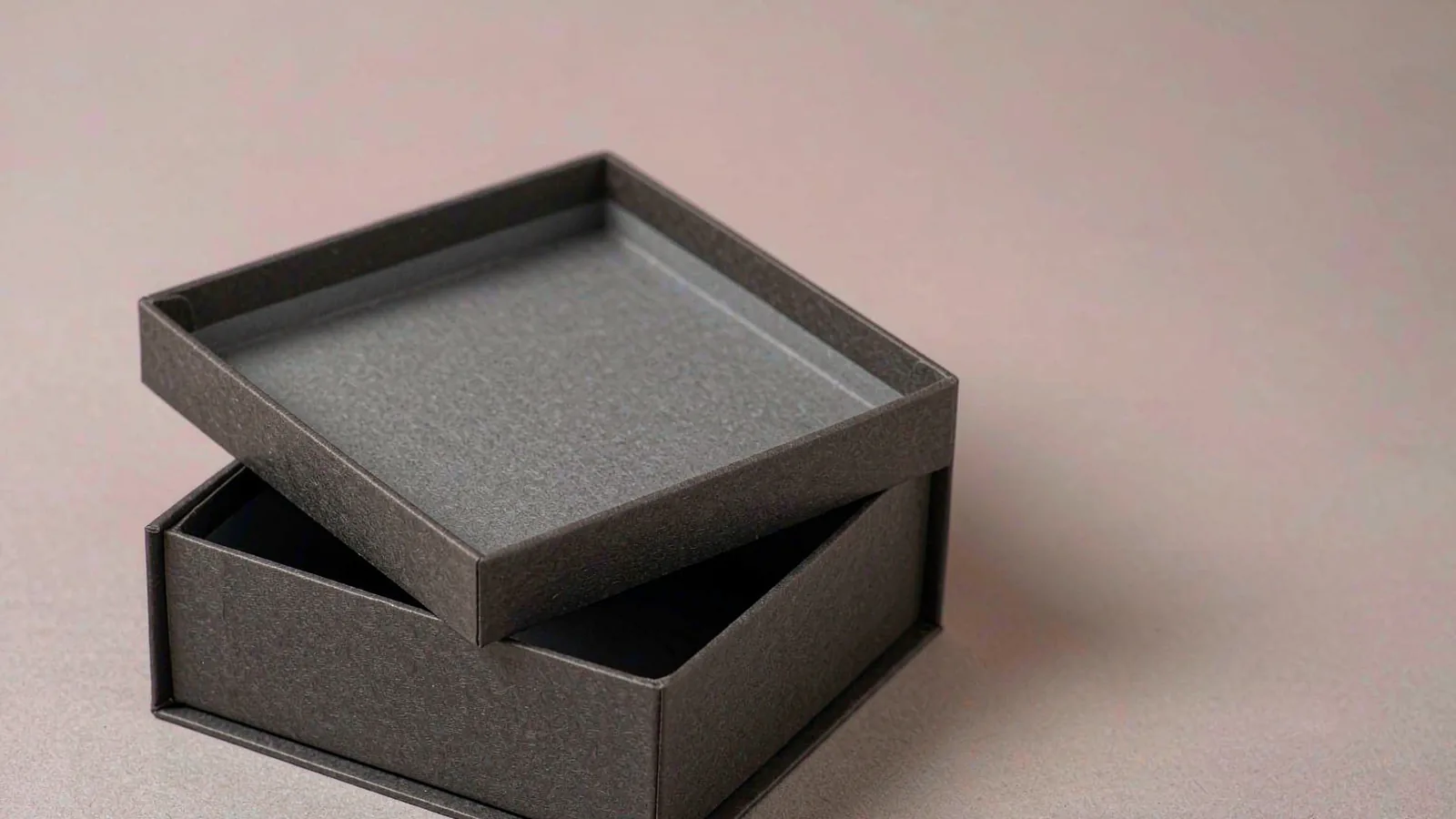
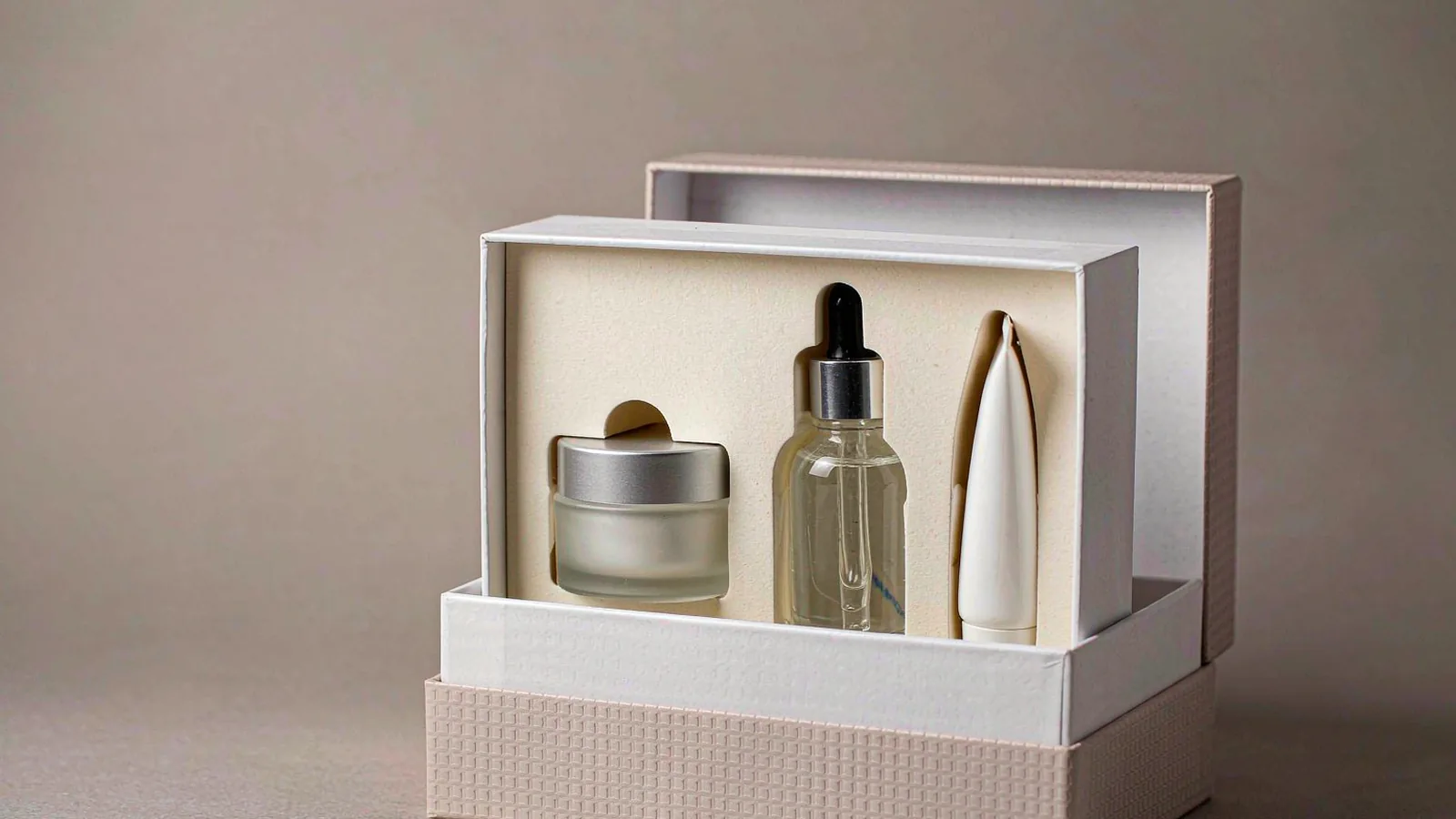
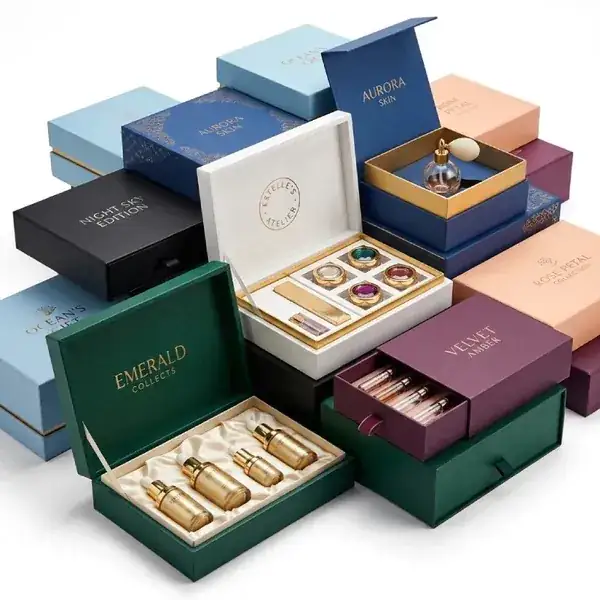
A book-style box replaces the lift-off lid with a hinge along one edge, so the cover swings open and the contents are read as a spread. That makes it the right structure when the product is flat and the presentation is horizontal: a palette, a set of samples, a mirror and a brush laid out side by side.
The hinge changes how the box is specified. The spine has to carry the cover through thousands of openings, the two halves have to sit flat when open, and the tray has to hold each item in its own recess so nothing slides when the cover moves. It is more work than a lid-and-base box, and it is the reason a palette feels like a palette rather than a box.
A palette, a flat set or a mirror reads better laid out than stacked in a cavity.
Opening the cover like a book presents the whole collection at once rather than one item at a time.
Two or more flat items need their own recesses, which a hinged tray provides naturally.
The hinge and spine make the box feel like a book, which suits a limited or press edition.
A colour collection presented as a spread, with each pan in its own cutout.
Samples, cards and a note laid out for a photograph.
Flat items held apart so the silvering and bristles do not touch.
A numbered or press box that is kept rather than recycled.
The hinge, the spine and the two tray halves are decided together. A spine that is too tight fights the cover; a tray that is too deep hides the spread.
The hinge is a wrapped board joint, not a metal hinge. Its width and the board grade decide how the cover swings and how long it lasts, so both are set from the weight of the cover and the number of openings expected.
Customise this boxWhen open, both trays should rest on the same plane so the spread photographs cleanly. That means the spine depth and the tray heights are matched, not chosen separately.
Customise this boxA die-cut or moulded tray holds each pan, mirror or brush in its own pocket, so nothing slides as the cover moves. Flat items are held by a ledge rather than a deep cavity.
Customise this boxA matte, velvet hand-feel that suits a book cover.
A title or crest on the cover, kept small so the spread leads.
Tactile branding that reads in a side-lit photograph.
Selective gloss on a matte field to lift one element.
| Board | Greyboard 1.5 – 3 mm caliper, matched to the loaded weight and the panel size |
|---|---|
| Closure | A hinged lid on a wrapped spine, opened from the fore-edge like a book |
| Interior | Die-cut paperboard collar or tray; foam or EVA where the shape is irregular |
| Tolerance | Die-cut panels to ISO 2768-1 class m: ±0.2 mm up to 30 mm, ±0.3 mm up to 120 mm. An assembled box carries a wider allowance, because the wrap is applied by hand. |
| Assembled size | Finished outer dimensions ±0.8 mm, measured across the lid once the wrap has settled |
| Smallest box | L 80 × W 50 × H 15 mm formed. |
| Print sheet | Sheet-fed offset up to 1,100 × 1,600 mm; flexo up to 1,397 × 2,413 mm |
Specifications are confirmed on your written quotation. Anything not written into the specification is not part of the order.
Board thickness is specified to ISO 534, the standard method for the thickness, density and specific volume of paper and board, so a millimetre in a specification means the same thing to both sides.
The board, print method and finish named above are explained in the packaging options reference — what each option does, which materials it works on, and where it stops working.
All of it is made in our two plants in Nanhai, Foshan, and Panyu, Guangzhou: Metapackink is the manufacturer rather than a broker, so the board is cut, the wrap printed and the box assembled on our own floors, where the sample comes from.
Everything else — minimum order, lead times, Incoterms, shipping — is the same whichever box you buy, and is set out under the table.
| OEM / ODM | We offer complete OEM and ODM for book-style boxes. ODM means fitting an existing book structure to your palette or set; OEM means developing the tray and hinge from your items. |
|---|---|
| Checked on the sample | A book-style sample is approved open and closed, with every item seated, because a spine that is a millimetre tight only shows when the cover is swung fully open. |
| Warranty | Book-style boxes are warranted against the approved sample for hinge action, tray clearance and the two halves sitting flat when open. |
Minimum order quantities are generally based on box size, structure and specifications. Standard custom orders typically start at 500 pieces per size and specification. Available stock sizes, simpler structures and repeat orders may allow lower quantities; special materials, complex structures and custom inserts may require higher minimums. Your written quotation confirms the minimum for your specification. Samples take 4 – 6 working days from approved artwork. Sample lead time is a separate stage from production; courier time is additional. Production takes 10 working days from the later of receipt of the cleared deposit or written sample approval. Transit time is additional. Shipping terms: EXW, FOB, CIF or DDP, sea, air or courier. Sequence and inspection: process · quality control.
A rigid box with a hinged cover that opens flat, so flat contents are presented as a spread rather than stacked in a cavity.
Palettes, flat cosmetic sets, press kits, mirrors and brush sets — anything read better laid out than lifted.
Yes. A recessed tray gives each item its own pocket, so the mirror and brush stay apart and do not slide.
Yes, because of the spine and the hinged tray. It is chosen when the spread is the presentation, not just the protection.
Yes. Send the palette, mirror and applicator and the tray and hinge are developed around them before production.
Shape, insert and industry change what book-style boxes can do without changing the structure underneath. Board and finishing are shared across the factory.
Finishing and board options are shared across the factory — how each is applied is on the manufacturing process page, and the structures they can be built into are on packaging solutions.
Commonly bought for Beauty and skincare Gift and presentation